A new study by TransUnion challenges common credit myths about Canadian gig workers, revealing that their financial profiles are broadly similar to the general population. The report, titled "The Gig Economy in Canada: Rethinking Credit Risk, Inclusion, and Market Opportunity," highlights that gig workers represent about 11% of Canada's workforce and play an increasingly important role in household income.
Key Findings on Gig Worker Credit Behavior
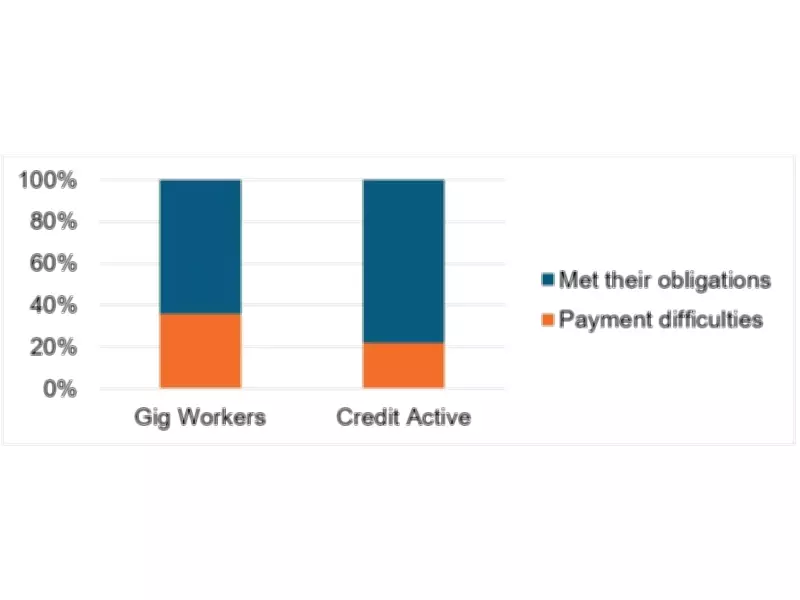
According to the study, 64% of gig workers report meeting their payment obligations without difficulty, though a higher share (36%) face payment challenges compared to 22% of the general population. This suggests some financial strain among certain segments, but overall credit profiles are comparable.
Income and Demographics
Six in ten (63%) gig workers use gig work to supplement full-time employment income, and nearly four in ten (39%) earn between $1,000 and over $4,000 monthly from gig work after expenses. Millennials make up the largest share (34%), followed by Gen X (27%) and Gen Z (17%).

Credit Risk Alignment
Among surveyed gig workers, 68% fall into prime and above credit risk tiers, compared to 73% of the general credit-active population. This indicates that gig workers are not uniformly high-risk, as often perceived.
Matt Fabian, senior director of research and consulting for Canada at TransUnion, noted that gig workers may face higher friction in credit applications, such as higher interest rates and lower credit limits, due to misconceptions about their income volatility. However, the study suggests that tailored assessment approaches are needed to reflect individual profiles rather than employment type alone.