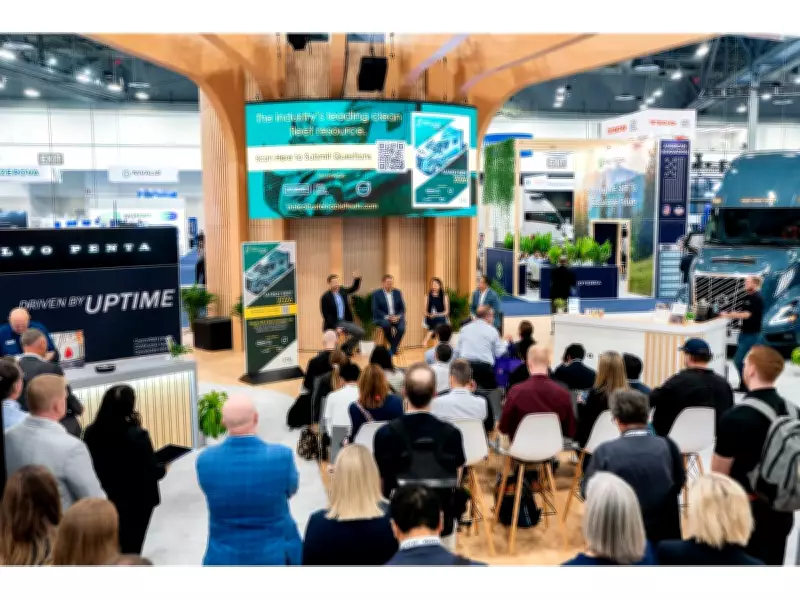
The State of Sustainable Fleets 2026 Market Brief was unveiled at ACT Expo, North America's largest fleet technology conference. This seventh annual report highlights how fleets pursuing multiple technology pathways are better positioned to absorb tariff disruptions, federal funding cuts, and prolonged freight market weakness.
Challenging Operating Environment
Commercial fleets face what analysts call the most complex operating environment in modern trucking history. A freight recession now in its third year is compounded by federal policy reversals, tariff-driven cost increases of up to $35,000 per new truck, and geopolitical volatility. The rollback of federal greenhouse gas standards, expiration of zero-emission vehicle tax credits worth up to $40,000 per eligible vehicle, cancellation of clean transportation funding, and nullification of California's clean truck regulations have shifted the policy landscape from federal to state and market-driven factors.
Industry Adaptation
Despite disruptions, the industry is structurally adapting. TRC Companies estimates that over $5 billion in state, local, and utility funding remains available annually through 2028 for clean fleet investments. Fleet technology markets are maturing across fuel and drivetrain types, and artificial intelligence has moved from pilot projects to mainstream operations.

The central finding is clear: fleets managing total cost of ownership across a portfolio of powertrain technologies demonstrate greater resilience. Powertrain diversification has become both a financial strategy and a risk management imperative.
Key Findings
Artificial Intelligence and Autonomous Trucking
AI-powered fleet management has moved to mainstream operations. Approximately half of fleets surveyed use AI for route optimization, dispatching, predictive maintenance, and diagnostics, reporting measurable cost savings and improved vehicle uptime. Survey respondents project that 35% of their fleets will be AI-enabled by 2027, nearly doubling from an estimated 20% in 2025.
Autonomous freight is advancing from pilot programs to commercial scale. Driverless light-duty vehicles have logged millions of miles, and heavy-duty autonomous trucks entered commercial service in 2025. Broader rollouts across more routes are expected by end of 2026.
The Market Brief was authored by TRC Companies, a WSP member company, with title sponsorship from Penske Transportation Solutions and Volvo Trucks North America, and support from Exelon Companies and S&P Global Mobility.