

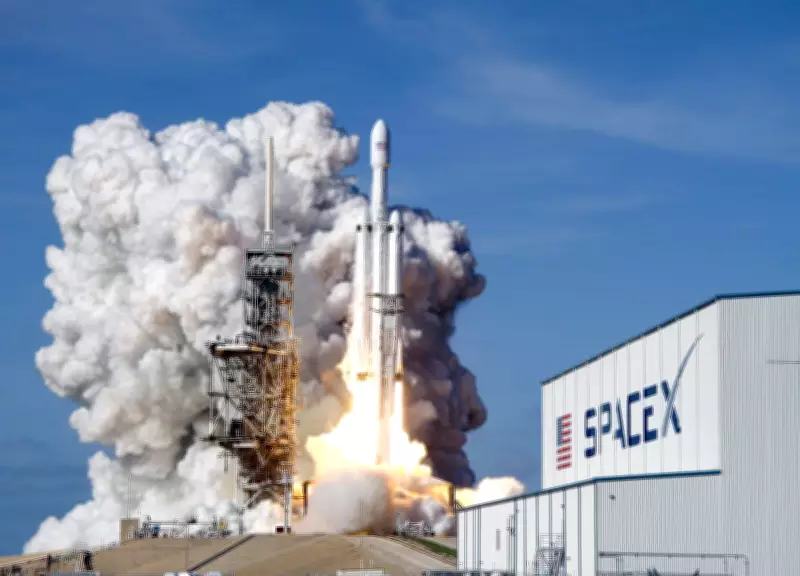
SpaceX Valuation Soars to $1.75 Trillion: Unpacking the Financial Metrics
The aerospace industry is witnessing a monumental shift as SpaceX achieves a staggering valuation of $1.75 trillion. This figure, reported by Reuters in April 2026, reflects the company's unprecedented growth and technological dominance. The valuation is not merely speculative; it is grounded in tangible achievements and robust financial performance that have reshaped the space sector.
Record-Breaking Launch Activity in 2025
Central to SpaceX's valuation surge is its launch cadence. In 2025, the Falcon 9 rocket completed 165 launches, setting a new annual record. This milestone underscores the company's operational efficiency and reliability, factors that directly contribute to its revenue streams and investor confidence. The Falcon 9, which made history in December 2015 as the first large rocket to achieve a controlled recovery after delivering a payload into orbit, has become a workhorse for global satellite deployments, resupply missions, and crewed flights.
The Financial Engine: Reusability and Market Expansion
Rocket reusability is a cornerstone of SpaceX's financial model. By recovering and refurbishing boosters, the company has drastically reduced launch costs, enabling competitive pricing and higher profit margins. This innovation has attracted a diverse clientele, including government agencies, private corporations, and research institutions, fueling consistent demand.

Moreover, SpaceX has expanded beyond launch services into satellite internet with Starlink, which boasts millions of subscribers worldwide. This diversification creates multiple revenue streams, enhancing the company's valuation through projected future earnings. Analysts point to Starlink's potential IPO as a further catalyst for growth, potentially unlocking additional value for shareholders.
Valuation Methodology: A Blend of Metrics
The $1.75 trillion valuation is derived from a combination of financial indicators:
- Revenue Multiples: SpaceX's annual revenue, estimated in the tens of billions, is multiplied based on industry benchmarks for high-growth tech firms.
- Discounted Cash Flow (DCF): Future cash flows from launches, Starlink, and upcoming projects like Starship are projected and discounted to present value.
- Comparable Company Analysis: Valuation is benchmarked against peers in aerospace and technology sectors, though SpaceX's unique position often commands a premium.
Investor appetite for space-related ventures remains strong, driven by the sector's long-term potential. SpaceX's ability to secure contracts, such as NASA's Artemis lunar missions, adds stability to its financial outlook, justifying the lofty valuation.
Challenges and Future Prospects
Despite the optimism, SpaceX faces hurdles. Regulatory scrutiny, competition from emerging players, and technical risks associated with ambitious projects like Mars colonization could impact growth. However, the company's track record of innovation and execution mitigates these concerns for many analysts.
Looking ahead, SpaceX's valuation may continue to climb as it advances Starship for deep-space missions and scales Starlink. The $1.75 trillion mark signifies not just a corporate milestone but a transformative moment for the aerospace industry, highlighting how private enterprise is driving humanity's expansion into space.






