

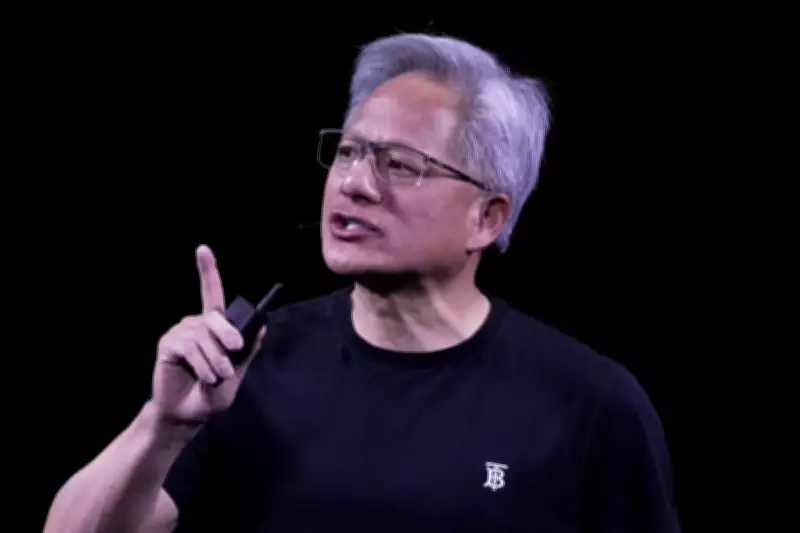
Nvidia's Massive OpenAI Investment Plan Halted by Impending Public Offering
In a significant revelation that underscores the complex interplay between corporate strategy and financial markets, Nvidia CEO Jensen Huang has confirmed that the semiconductor giant will be unable to execute a planned US$100 billion investment in artificial intelligence leader OpenAI. The primary obstacle, according to Huang, is OpenAI's forthcoming initial public offering (IPO), which introduces regulatory and structural barriers that prevent such a substantial direct investment.
Regulatory Hurdles and Strategic Realignments
The announcement highlights how the transition to a publicly traded entity imposes new constraints on OpenAI's capital-raising activities. Once a company files for an IPO, it enters a quiet period where large, pre-arranged investments from single entities like Nvidia can conflict with securities regulations designed to ensure fair market access for all investors. This regulatory environment effectively blocks Nvidia from deploying its considerable resources to acquire a major stake in the AI firm at this critical juncture.
Jensen Huang, who has positioned Nvidia as a central player in the AI hardware ecosystem through its advanced graphics processing units, expressed both understanding and disappointment regarding the situation. "Our intention was to deepen our strategic partnership with OpenAI through this investment, but the IPO process creates complexities that make this particular transaction unfeasible at this time," Huang stated. The CEO emphasized that Nvidia remains committed to collaborating with OpenAI on technological development, even as the investment avenue closes.

Broader Implications for AI Industry Financing
This development occurs against a backdrop of intense competition and massive capital flows within the artificial intelligence sector. The blocked $100 billion investment would have represented one of the largest single corporate investments in AI history, potentially reshaping the balance of power between hardware providers and AI software developers. Analysts suggest that OpenAI's IPO, while limiting certain investment opportunities, will democratize ownership and could value the company at unprecedented levels, possibly exceeding $1 trillion.
The situation also reveals the strategic calculations of both companies:
- OpenAI benefits from broader market participation through its IPO, gaining diversified shareholders rather than concentrated ownership.
- Nvidia preserves capital for other strategic initiatives while maintaining its crucial supplier relationship with OpenAI.
- Both entities avoid potential regulatory scrutiny that might accompany such a massive transaction between two dominant AI market players.
As the artificial intelligence revolution accelerates, this episode illustrates how traditional financial mechanisms like IPOs can unexpectedly redirect the flow of capital and influence within emerging technological ecosystems. While Nvidia's direct investment path is closed, industry observers anticipate continued indirect collaboration through hardware partnerships, joint research initiatives, and potential future investment opportunities post-IPO.






