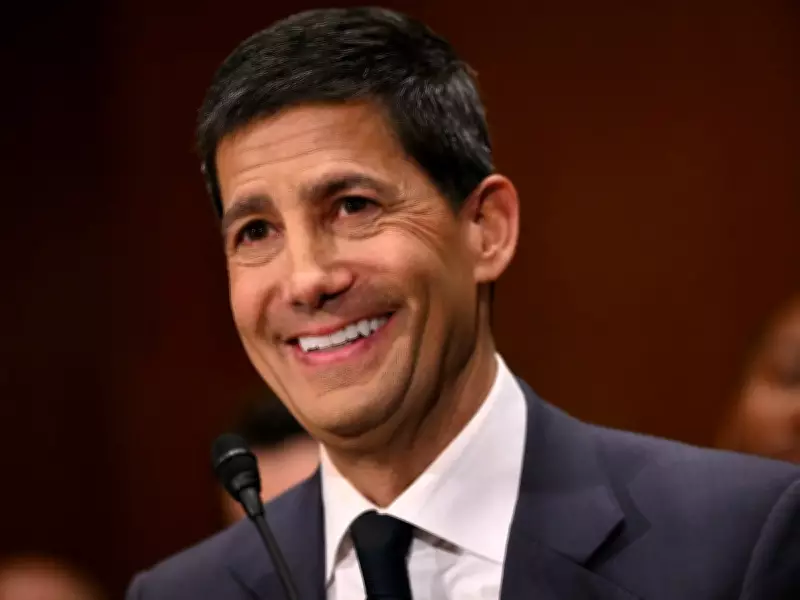
As Kevin Warsh steps into his new role as chair of the U.S. Federal Reserve this week, he faces a complex economic landscape marked by persistent inflation, intense pressure from President Donald Trump to lower interest rates, and growing debates over the impact of artificial intelligence on the economy. A former Wall Street banker, White House advisor, and Fed governor, Warsh has signaled his intention to implement a policy "regime change" at the central bank. This article examines his career trajectory, his views on Fed independence, and the potential implications of his leadership for Canada.
Who is Kevin Warsh?
A graduate of Stanford University and Harvard Law School, Warsh began his career in investment banking at Morgan Stanley during the 1990s. He later held several key economic and financial advisory roles in the George W. Bush administration in the early 2000s. At age 35, he became the youngest-ever governor of the Federal Reserve when he joined the central bank in 2006. His financial background proved invaluable during the 2008 financial crisis, as he helped bridge communication between policymakers and Wall Street, enabling the Fed to interpret rapidly shifting market conditions.
During his initial tenure at the Fed, Warsh was regarded as an "inflation hawk," prioritizing low inflation and expressing skepticism toward aggressive rate cuts and quantitative easing policies. After leaving the central bank in 2011, he joined the Stanford Graduate School of Business as a lecturer and became a distinguished visiting fellow in economics at the Hoover Institution, a public policy think-tank at Stanford. He also serves as a partner at the New York-based Duquesne Family Office, founded by billionaire investor Stanley Druckenmiller.

When President Trump announced Warsh as his pick for Fed chair on January 30, the decision came as little surprise, as Warsh had been on the president's radar for nearly a decade. He was a contender to replace former chair Janet Yellen in 2017, a position that ultimately went to Jerome Powell, and was also reportedly considered for Treasury secretary.
Warsh is married to Jane Lauder, a granddaughter of cosmetics magnate Estée Lauder, who worked at the family company until 2024 and remains on its board. Financial disclosure documents from his confirmation process indicate assets well in excess of US$100 million, while Forbes estimates his wife's fortune at over US$2 billion.
What is Warsh's agenda for the Fed?
At his Senate confirmation hearing on April 21, Warsh asserted that the 112-year-old Fed requires a policy "regime change." While historically hawkish, he has recently suggested that lower interest rates could be justified. In a November op-ed for the Wall Street Journal, he argued that artificial intelligence would act as a "significant disinflationary force" by boosting productivity. He also stated that inflation is a "choice" that occurs "when government spends too much and prints too much."
Warsh's tenure begins amid intense White House pressure to cut rates, a stance that raises questions about the central bank's independence. His views on AI and productivity could shape monetary policy in an era of rapid technological change. For Canada, the direction of U.S. interest rates under Warsh will have direct implications for the Canadian dollar, trade dynamics, and the Bank of Canada's own policy decisions. As a familiar figure to both Bank of Canada Governor Tiff Macklem and former Governor Mark Carney, Warsh's leadership may foster close cross-border coordination, but his hawkish roots suggest a cautious approach to easing.