You may have missed the news about Tracker, the hit CBS series produced by Disney studios in British Columbia for the past three seasons. Earlier this week, Disney confirmed it is moving production of the fourth season out of the province and down to California. The stated reason for the move: Disney just received US$48 million from California's multibillion-dollar tax-credit system.
So bye-bye British Columbia, where the provincial government also runs a big-dollar film and television subsidy operation, as do the federal government, several other provinces and many cities. The big winner from the Tracker move, however, is California's Democratic Governor Gavin Newsom. In an online post, Newsom's office said, "One of the most-watched shows on TV will deliver good-paying, quality jobs for L.A. crews and a boost to local businesses."
California's US$48-million tax credit is part of Newsom's US$750-million film and TV subsidy system announced in 2024 — equal to more than a billion Canadian dollars. Other shows among more than a dozen collecting taxpayer money recently in California include The Pitt, Rooster, High Potential, and SCHOOLED!, a new sitcom co-produced by Jimmy Kimmel.

The much glorified Hollywood that produces billions of dollars in global revenue, making movie stars rich and lining the balance sheets of big-name corporations, has become an international cabal of corporate welfare seekers. At least five U.S. states, many national governments, and Canadian provinces are constantly scrambling to give money to film and TV producers.
Which apparently is all perfectly fine for the predominately squishy Hollywood crowd and its gaga media star gazers. When the Met Gala took place the other night in Manhattan, the major controversy was the fact that the high-fashion evening was sponsored by tech billionaire Jeff Bezos and his wife. A Los Angeles Times critic complained that "This year's Met Gala proved one thing. The real devil who wears Prada is Jeff Bezos."
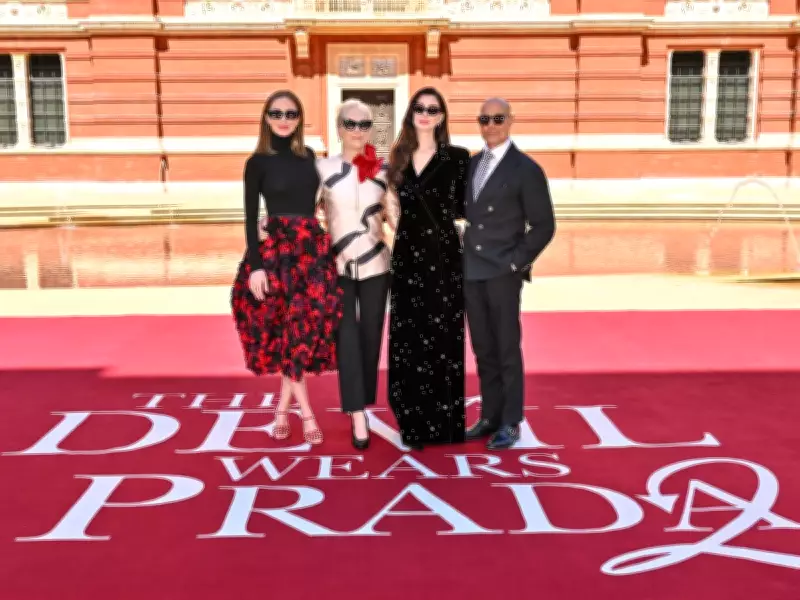
The Prada reference relates, of course, to the fact that the Met Gala this year not-coincidentally took place at the same time as the release of The Devil Wears Prada 2, a blockbuster fashion flick whose star cast members — Anne Hathaway, Emily Blunt and Stanley Tucci — allegedly "stunned" the gala when they appeared, according to the Hollywood Reporter.
Forgive me, but The Devil Wears Prada is now a Disney property, thanks to its recent acquisitions — the same Disney that over the past decade and a half collected US$2.2 billion in subsidies from the United Kingdom government alone. Why would a global entertainment giant need such subsidies when, according to a Times of London analysis, Disney generated US$127 billion in pre-tax profits over the same period? In the U.S., Disney is also now collecting credits for animation films.
The subsidy war is not limited to California and British Columbia. Other U.S. states, such as New York, Georgia, and Louisiana, offer lucrative tax credits to lure productions. Internationally, countries like the UK, Canada, Australia, and New Zealand compete with generous incentives. The result is a race to the bottom where taxpayer money flows to wealthy corporations and celebrities, while the average citizen foots the bill.
Critics argue that these subsidies rarely provide a net economic benefit. Studies have shown that film tax credits often fail to generate enough tax revenue to offset their cost, and they primarily enrich studio executives and top talent. Yet, politicians continue to expand these programs, citing job creation and local spending as justifications.
In British Columbia, the loss of Tracker is a blow to the local industry, which has enjoyed a boom in recent years thanks to provincial subsidies. The province has offered up to 35% tax credits on eligible labor costs, making it a competitive location for Hollywood productions. However, California's deeper pockets have now lured away a major show.
As the subsidy wars intensify, the question remains: who truly benefits? The answer, as Terence Corcoran notes, is that the devil wears subsidized Prada — and the rest of us are paying for it.