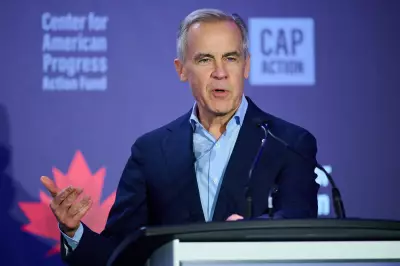
Prime Minister Mark Carney set an ambitious target last year for Canada to double its non-United States exports over the next decade, a goal that built on his election campaign pledge to make the country's economy less reliant on its southern neighbour. The prime minister has made building major energy projects and export-enabling infrastructure a cornerstone of his political agenda, promising to diversify trade in response to U.S. tariffs squeezing the Canadian economy and driving panic about the country's heavy dependence on access to the American market.
Early Claims of Success
Since then, his government has claimed early signs of success. Its recent budget update said trade diversification efforts “are bearing fruit,” noting that non-U.S. goods exports are up by about 36 per cent since 2024. However, a closer look at the trade data reveals that the increase in Canadian exports to countries outside the U.S. has been driven by two price-volatile commodities — gold and oil — rather than businesses breaking ground in new markets.
Gold and Oil Driving the Numbers
While increasing the share of goods exported to countries other than the U.S. would normally suggest trade diversification, much of that increase has to do with bullion and crude, according to Marc Ercolao, an economist at Toronto-Dominion Bank. A strong run-up in gold prices has driven a surge in Canadian exports of precious metals, which rose by 70 per cent between December 2024 and March 2026, based on customs data. That increase has been driven by higher shipments of gold to the United Kingdom, rising by nearly three-fold during that period.

Excluding precious metals, Canada’s non-U.S. exports remained essentially flat relative to December 2024, prior to the U.S. trade war, according to the customs data. Some of the gold counted among Canada’s exports isn’t even leaving the country. That is revealed when one looks at the difference between the customs data, which shows goods crossing the border, and balance-of-payments data, which tracks ownership. The gap suggests a portion of the “exported” precious metals in March simply changed owners without physically moving.
Energy Exports and the Trans Mountain Pipeline
Energy exports to non-U.S. countries have also risen, which partly reflect increased shipments to Asia following the 2024 opening of the expanded Trans Mountain pipeline. But overall energy exports were relatively flat over that period — despite some monthly volatility — up until the start of the Iran war in late February. “Bottom line is that we haven’t yet seen durable evidence that we’re building out new export channels for new products to new markets,” which is likely to be a multi-year process, Ercolao said. “It took decades to build these supply chains with the U.S.”
Carney's Global Outreach
Carney promised to diversify trade in response to U.S. tariffs squeezing the Canadian economy and driving panic about the country’s heavy dependence on access to the American market. The prime minister has spent a considerable amount of time jetting around the world to build closer business ties with countries such as China and the United Arab Emirates. But Andrew DiCapua, principal economist at the Canadian Chamber of Commerce, said it’s “too early to tell” if the diversification push has paid off.