Donna Kennedy-Glans: Carney must ensure sovereign wealth fund doesn't crowd out private business
The history of Canada's railways offers a lesson in the perils of nationalization
By Donna Kennedy-Glans Published May 05, 2026

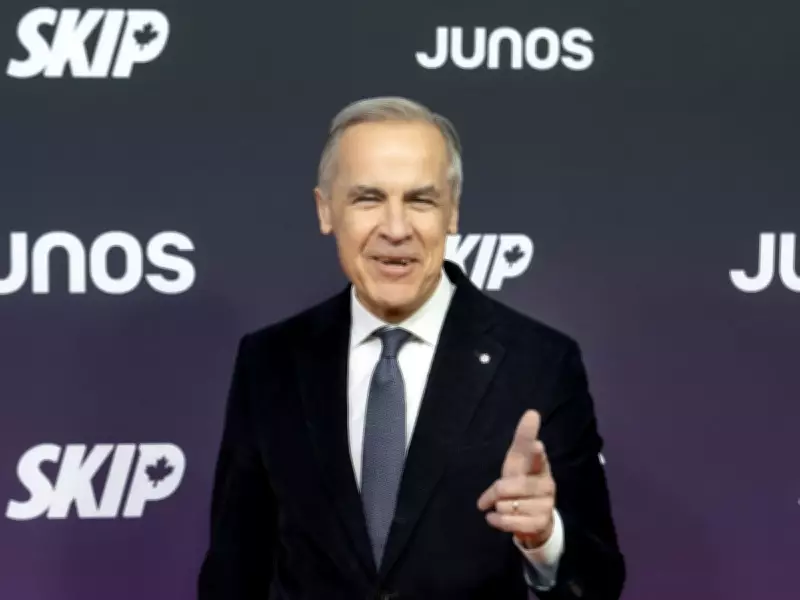
Prime Minister Mark Carney attends the 2026 Juno Awards in Hamilton, Ont., on March 29. Photo by Peter J Thompson/National Post
“There was a time in this fair land when the railroad did not run.”
That’s the first line of Gordon Lightfoot’s folk song, “Canadian Railroad Trilogy,” which was commissioned by the CBC for Canada’s centennial in 1967. I was only seven at the time but remember the tune well.
It captured something authentic about Canada: the awe of a vast, silent wilderness giving way to human ambition, sweat and iron. Navvies swinging hammers, bending their backs “ ’til the railroad is done.” It wasn’t government branding; it was a country hearing its own story in folk music.
Last week, Prime Minister Mark Carney tried to strike a similar chord.
He announced the Canada Strong Fund — Canada’s first national sovereign wealth fund, seeded with $25 billion in federal cash. Canadians with “a bit of extra money” will be invited to invest directly. The pitch: Canada is investing in “nation-building projects,” including energy, mining, agriculture and infrastructure. “This is our country,” Carney assures us, “it’s your future, and we’re building it together.”
The rhetoric is seductive. In a world rocked by U.S. President Donald Trump’s tariffs and spats over rights and sovereignty, many Canadians yearn for that 1967 sense of shared purpose. The fund’s defenders see it as smart public capital catalyzing private investment where markets hesitate. But rhetoric and reality must cohere if this is to work.
Carney must now syncopate policy and politics with the precision of a folk guitarist navigating Lightfoot’s shifting rhythms — or, to borrow from another iconic Canadian, the way Glenn Gould reinterpreted Bach’s “Goldberg Variations” between his dazzling 1955 recording and the slower, more contemplative 1981 version. It was the same underlying music, yet profoundly different in tempo and spirit, to match the times in which it was performed.
For Carney, the political up-beat of his new sovereign wealth fund is pure centennial romance: “Canada strong,” retail investors sharing in prosperity and building together to defend against external shocks.
The policy down-beat is harsher: $25 billion of borrowed money added to an already mounting debt; an arm’s-length Crown corporation that must generate commercial returns beating Ottawa’s own cost of debt; and the imperative for ironclad independence from politicians.
On this latter point, I know of what I speak. In 2013, I sat as an independent MLA in the Alberta legislature to protest my own government’s raid on the Alberta Heritage Savings Trust Fund.
If Carney misses the rhythm, the fund becomes either feel-good branding that changes nothing or another vehicle for Ottawa to pick winners with taxpayers’ money.
History offers a cautionary riff.
Canada’s railways began as bold private ventures — the Canadian Pacific Railway was a private company that was heavily supported by government subsidies, land grants and loan guarantees. Other rail lines were also launched as ambitious private ventures. However, over time, many railways were nationalized, leading to inefficiencies and crowding out private investment. The lesson is clear: when government funds dominate, private enterprise retreats, innovation stagnates, and costs escalate.
Carney’s fund must avoid this trap. It should complement private capital, not compete with it. Clear rules, transparency, and a focus on projects that truly require public seed money are essential. Otherwise, the Canada Strong Fund could become a monument to good intentions but poor outcomes.
The centennial spirit of 1967 was about building together, but it was also about trusting Canadians to build on their own. Carney must ensure his fund does not stifle that entrepreneurial drive.