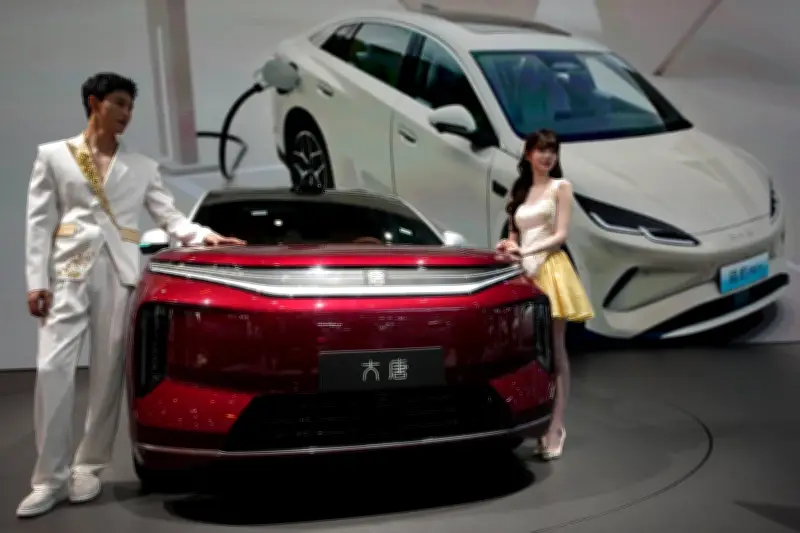
Canada has issued a pointed message to Chinese automakers seeking to enter the Canadian market: 'build where you sell.' The statement, made by federal officials, signals a new phase in Canada's trade policy toward China, particularly regarding the rapidly growing electric vehicle (EV) sector.
Policy Shift Targets Chinese EV Makers
The 'build where you sell' policy is aimed at ensuring that Chinese automakers, such as BYD and others, establish manufacturing facilities in Canada if they want to sell vehicles in the country. This approach mirrors similar strategies adopted by other nations, including the United States and European Union, which have imposed tariffs or demanded local production in exchange for market access.
According to a government source familiar with the matter, the policy is intended to protect Canadian jobs and foster domestic EV production capacity. 'We want to ensure that Canadian workers benefit from the transition to electric vehicles,' the source said, speaking on condition of anonymity.

Impact on Chinese Automakers
Chinese automakers have been aggressively expanding globally, with companies like BYD and NIO eyeing the North American market. However, Canada's new stance could complicate their plans. BYD, which showcased its latest EV models at Auto China 2026 in Beijing, had been exploring entry into the Canadian market. The new policy may require them to invest in Canadian manufacturing facilities or face restricted access.
Industry analysts note that China's dominance in EV production—accounting for over 60% of global EV sales—has prompted concerns in Western nations about unfair competition and overreliance on Chinese supply chains. Canada's move aligns with broader efforts to diversify supply chains and bolster domestic manufacturing.
Existing Trade Tensions
Canada's message comes amid ongoing trade tensions with China, including disputes over tariffs, intellectual property, and human rights. In recent years, Canada has imposed tariffs on Chinese steel and aluminum, while China has retaliated with restrictions on Canadian canola and pork. The new policy could escalate these tensions further.
In a related development, Ottawa has reversed an order to surrender some 'lost Canadian' citizenship certificates, a move that has drawn criticism from opposition parties. Meanwhile, the government has also unveiled a nuclear strategy, promising to make Canada an energy superpower.
Reactions from Industry and Labor
Canadian auto industry groups have welcomed the policy. 'This is a positive step to ensure that Canadian workers and communities benefit from the EV revolution,' said a spokesperson for Unifor, the union representing autoworkers. 'We need to ensure that any automaker selling vehicles in Canada contributes to our economy by creating jobs here.'
However, some business groups have expressed caution, warning that the policy could lead to higher vehicle prices or reduced consumer choice. 'While we support domestic manufacturing, we must be careful not to alienate trading partners or limit competition,' said a representative of the Canadian Chamber of Commerce.
Global Context
Canada's stance is part of a broader global trend. The United States, under the Inflation Reduction Act, offers tax credits only for EVs assembled in North America, effectively requiring automakers to build locally. The European Union has also proposed tariffs on Chinese EVs to protect its domestic industry. Canada's policy may be seen as aligning with these measures.
As the world transitions to electric vehicles, the battle over where they are built is intensifying. Canada's 'build where you sell' message is a clear signal that it intends to be a player in this new industrial landscape.