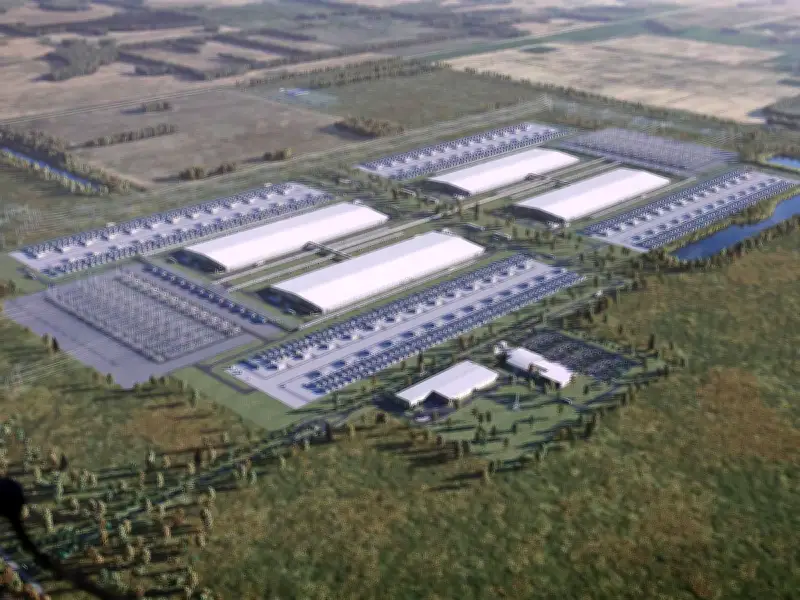
Meta announced plans this week to build its first Canadian data centre in Alberta, representing an investment of more than $13 billion. The facility, to be located in Sturgeon County, will transform Alberta's cheap, abundant natural gas power into a globally exportable product: AI and digital services sent over fibre optic networks.
Turning Electricity into an Exportable Product
Alberta produces more natural gas than any other Canadian province, yet electricity is hard to move over long distances. Data centres solve that problem by consuming local power and converting it into digital services that cross borders instantly. This is analogous to refining bitumen domestically rather than shipping raw oil sands product; data centres allow Alberta to refine its electricity into a finished good the world demands.
According to Shawn Freeman, founder of Always Beyond Corp., “Companies aren’t choosing Alberta out of charity. They’re choosing us because we have the one thing this industry runs on, and we have it in volume.”

Economic and Security Benefits
Beyond the initial construction, data centres require ongoing maintenance by trades, engineers, and local suppliers, creating stable employment that persists even during oil and gas downturns. This diversifies Alberta's economy and smooths boom-and-bust cycles. Additionally, keeping data on Canadian soil ensures it remains under Canadian laws and protections, a growing concern as foreign governments increasingly control data access.
Addressing Concerns
Critics have raised valid questions about water usage, grid strain, and farmland loss. However, modern data centre design can recycle water extensively, and projects can bring their own power generation rather than relying on the existing grid. Freeman emphasizes that these are problems to solve, not reasons to walk away, provided companies engage in “good engineering and straight talk with the communities involved.”
Meta's $13 billion investment signals that the window of opportunity is open now, but it won't last forever. Some firms are already exploring orbital data centres beyond any single country's grid or rules. “The advantage we hold today is not permanent,” Freeman warns, “and moving too slowly could hand it to someone else.”