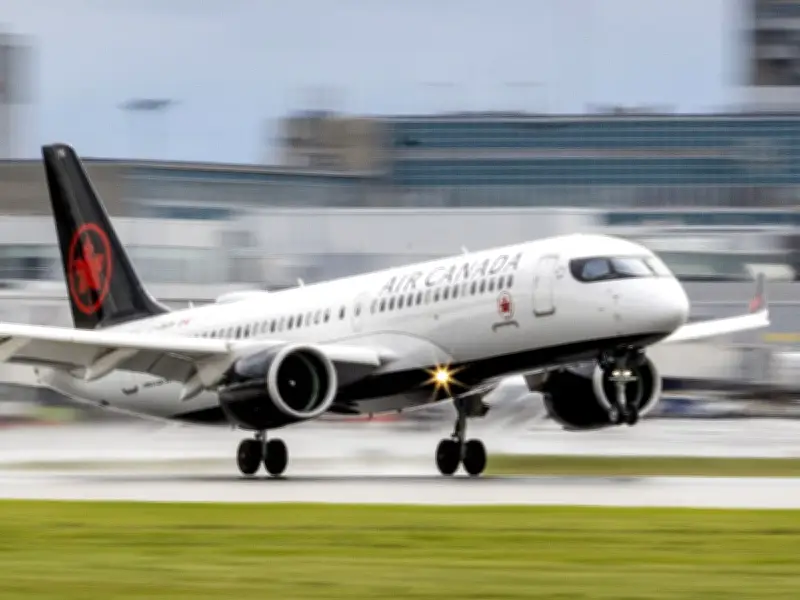
Air Canada is making a significant investment in a new fleet of A321XLR aircraft manufactured by Airbus SE, aiming to open up new routes, boost revenue, and reduce fuel expenses. The airline showcased the aircraft for the first time in Montreal ahead of its commercial debut next week.
New Aircraft, New Opportunities
The new single-aisle plane is the first of 30 that Air Canada expects to receive from Airbus by the end of 2029, a delay of about two years due to supply-chain issues. The narrowbody aircraft has a range of up to 4,700 nautical miles and can carry 182 passengers. This flexibility allows the airline to serve secondary routes, such as Toronto-Copenhagen or Montreal-Berlin, at a lower cost.
Chief Operations Officer Mark Nasr stated that the new Airbus jet enables year-round service on routes that were previously only feasible in summer, or daily service on markets that were served a few times a week. The A321XLR consumes 20 percent less fuel than its previous generation, reducing the financial risk of exploring new routes.

Shifting Travel Patterns
Canadians are increasingly traveling to European and South American destinations, partly due to protests over U.S. President Donald Trump's tariffs and rhetoric about making Canada the 51st state. Air Canada's passenger revenue on transatlantic routes rose four percent last year, while U.S. flights dropped by 10 percent. The airline has launched new services, including flights from Montreal to Catania, Italy, and from Toronto to Roatan, Honduras.
Premium Cabin Experience
In the new Airbus jet, Air Canada introduces a cabin design with 14 lie-flat seats in business class, called Signature Class, and ergonomic reclining seats in economy. All seats feature phone and tablet holders, 4K OLED screens, Bluetooth audio, and free Wi-Fi. Most upgrades are in business class, where profitability is higher. Nasr noted that demand for premium experiences has grown rapidly since the COVID-19 pandemic, and the airline plans to shift toward a more premium offering to grow revenue.
Future Plans
Air Canada also expects the first delivery of Boeing 787-10 Dreamliner aircraft this year, on which it will test a higher level of business class called Signature Plus, featuring four suites in the first row with a companion seat and a larger bed. The airline aims to raise its adjusted Ebitda margin to at least 17 percent by 2028, up from around 15 percent last year.
All of Air Canada's planes, including those deployed on its lower-cost leisure unit Rouge, will be retrofitted to the latest design standards over the next decade.