

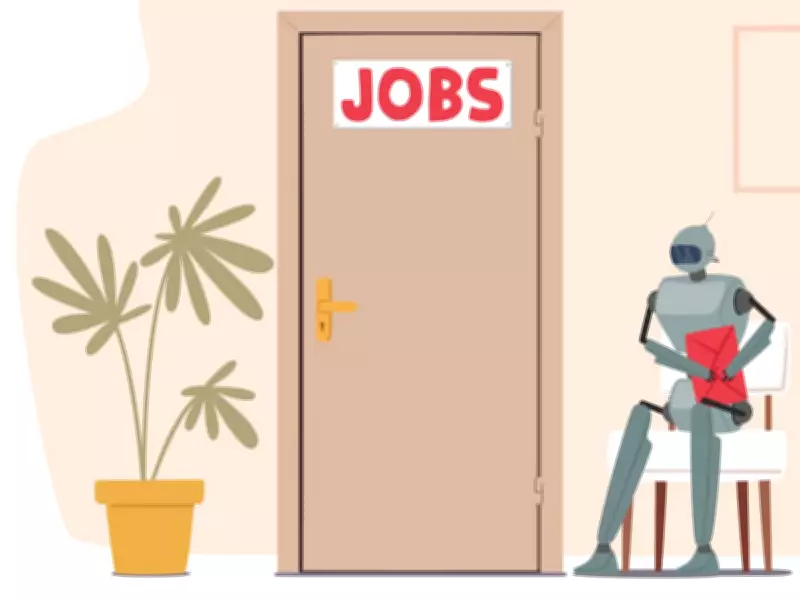
Everyone is asking the wrong question about artificial intelligence. The debate has fixated on whether AI will replace existing jobs, creating dramatic headlines while missing the more subtle reality unfolding in real time. What should concern employers, policymakers, and workers far more is a different phenomenon entirely.
The Real Question About AI's Labor Impact
The crucial inquiry isn't about job replacement but about what happens when positions are never even created. A recent study by Anthropic provides an answer that should make everyone in labor economics pause. Despite widespread rhetoric about mass displacement, there's no corresponding spike in unemployment in occupations most exposed to AI technology.
Workers aren't being shown the door in large numbers, at least not yet. The real story lies in what's missing from the employment landscape: new hiring opportunities.

The Silent Hiring Freeze
There's no wave of layoffs sweeping through industries. Instead, there's a hiring freeze quietly embedded within technological change. Data shows that since generative AI tools like ChatGPT became widely adopted, hiring in certain entry-level, AI-exposed roles has fallen by approximately 14 percent. Other employment categories have remained largely stable during this period.
This divergence isn't accidental but structural. The roles being affected aren't fringe occupations destined for obsolescence. They're the traditional on-ramps into professional life: junior programming positions, customer support roles, basic data processing jobs, and routine analytical work.
Career Foundations Under Pressure
These positions once formed the foundation of career progression for countless professionals. In some of these roles, AI can already perform a substantial portion of the task mix, particularly in coding-related functions where it can now assist with a majority of routine outputs.
This technological capability doesn't eliminate the function itself but reduces the number of human bodies required to perform it. Employers, being rational economic actors, respond accordingly to this new reality.
The Simple Economic Logic
The logic is both straightforward and entirely predictable. If one employee supported by AI can now accomplish work that previously required two people, then two hires become one. In some cases, one becomes zero.
There's no redundancy process, no termination dispute, no severance negotiation, and no headline-grabbing layoff announcement. Instead, there's simply a job requisition that never opens, a position that never materializes.
From a legal perspective, nothing occurs. But from an economic perspective, everything changes. The traditional pathways into professional careers are being quietly reconfigured by technological advancement.
An Inverted Automation Pattern
For years, conventional wisdom held that automation would first displace lower-wage, lower-skilled labor. This time, the pattern is inverted. The roles most exposed to AI are disproportionately held by better-educated, higher-paid workers in white-collar occupations.
On average, these workers earn significantly more than those in less affected roles. These aren't manufacturing jobs being automated away; they're office positions and professional services roles that have long been considered stable entry points into the labor market.
The implications extend beyond immediate employment statistics. When entry-level positions disappear, the entire career ladder becomes harder to climb. Young professionals face fewer opportunities to gain experience, develop skills, and establish themselves in their chosen fields.
Looking Beyond the Headlines
This quiet transformation requires attention from multiple stakeholders. Employers must consider how to maintain career pathways while leveraging AI's productivity benefits. Policymakers need to understand how education and training systems should adapt to prepare workers for this new reality.
Workers themselves must recognize that the threat isn't necessarily losing existing jobs but facing diminished opportunities to enter certain professions in the first place. The conversation about AI's impact on employment needs to shift from dramatic layoff scenarios to the more subtle but equally significant phenomenon of jobs that never come into existence.






