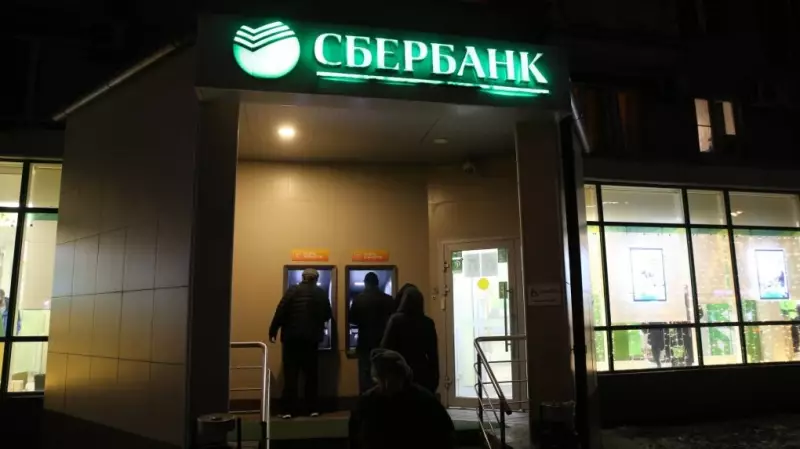
The United States government has taken a notable step in international finance by removing sanctions against a former high-ranking official from Russia's largest bank. This action marks a shift in the complex landscape of global economic penalties.
Details of the Sanctions Removal
On December 30, 2025, the U.S. Treasury Department's Office of Foreign Assets Control (OFAC) formally delisted Alexandra Buriko from its Specially Designated Nationals list. Buriko is a former executive of Sberbank, Russia's state-owned banking and financial services giant. The sanctions were originally imposed as part of a broader series of economic measures targeting Russian financial institutions and key individuals following geopolitical tensions.
The specific reasons for the removal of sanctions against Buriko were not detailed in the public announcement. However, such actions typically follow a review process that may involve demonstrating a change in circumstances or role. It is significant to note that the delisting applies specifically to the individual, Alexandra Buriko, and does not represent a blanket lifting of sanctions on Sberbank as an entity, which remains under various U.S. restrictions.

Context and Potential Implications
This development occurs within a delicate framework of ongoing diplomatic and economic relations between the West and Russia. Sanctions on Russian entities and individuals have been a cornerstone of foreign policy for several years, aimed at exerting pressure over various international issues.
The removal of sanctions from a single former banking executive could be interpreted in several ways:
- A case-specific review: It may simply be the result of a standard administrative process where an individual no longer meets the criteria for designation.
- A diplomatic signal: In the nuanced world of international relations, such moves can sometimes serve as subtle gestures.
- Impact on business: For Alexandra Buriko personally, the delisting removes significant legal barriers to engaging in transactions within the U.S. financial system or with U.S. persons.
The news was reported by Reuters and published in the morning hours of December 30, Eastern Standard Time. The original report did not include a statement from Buriko or from Sberbank regarding the U.S. government's decision.
Looking Forward
While this action is specific to one individual, analysts who monitor sanctions policy will be watching to see if it indicates any broader trend or shift in approach. The enforcement and modification of economic sanctions are dynamic tools of statecraft, constantly evolving in response to global events.
For Canadian observers, particularly those in business and finance, understanding these changes is crucial. Canada often coordinates its sanctions regimes closely with its allies, including the United States. Any shift in U.S. policy can have ripple effects on Canadian economic interests and foreign policy alignment. The decision underscores the ever-changing nature of international finance and the complex interplay between geopolitics and global banking.