

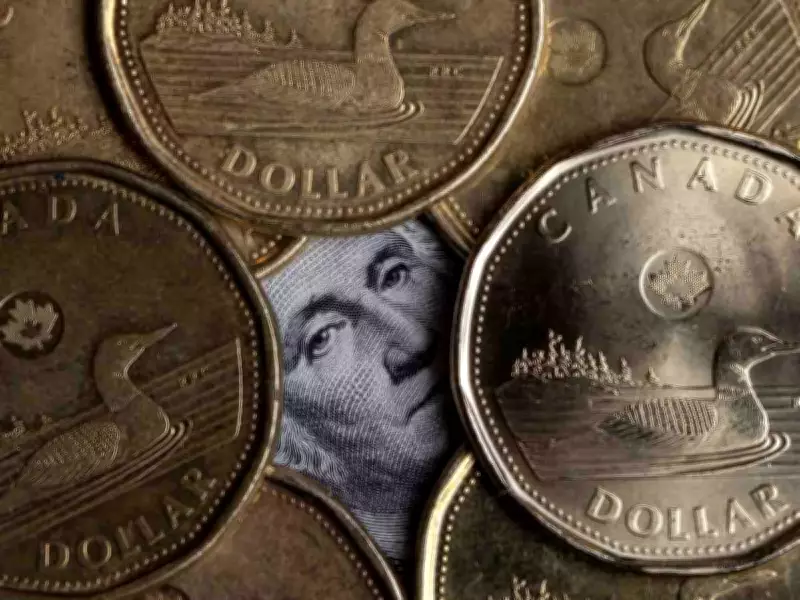
U.S. Dollar Overtakes Canadian Dollar as Dominant Petrocurrency Amid Economic Shift
The Canadian dollar has relinquished its long-standing role as a petrocurrency to the United States dollar, a shift driven by the latest global energy crisis and fundamental changes in the Canadian economy, according to currency analysts. This transition marks a significant departure from historical patterns where the loonie closely tracked oil price movements.
The Shale Revolution's Impact on Currency Dynamics
Karl Schamotta, chief market analyst at Corpay Currency Research, emphasized that the shale revolution has fundamentally altered global energy markets. "The shale revolution turned the United States into the world's largest oil and natural gas producer, meaning energy price swings now feed more directly into American trade balances, capital flows and Federal Reserve policy expectations," Schamotta noted in a recent analysis.
This development means that fluctuations in oil prices now have a more pronounced effect on the U.S. dollar than on the Canadian dollar, reversing a relationship that persisted for decades.

Recent Market Movements Highlight the Decoupling
The changing relationship between the Canadian dollar and oil was vividly demonstrated on Wednesday when the loonie rose against its American counterpart while oil prices fell. West Texas Intermediate crude, the North American benchmark, dropped approximately 16 percent following news of a temporary ceasefire between the United States and Iran.
Despite this oil price decline, the Canadian dollar climbed 0.3 percent to just over 72 cents U.S., recovering from a two percent decline experienced between February 28 and early April during the peak of geopolitical tensions.
Shaun Osborne, chief currency strategist at the Bank of Nova Scotia, observed: "While a Gulf truce will weigh on oil prices, the Canadian dollar's gearing to crude has been relatively weak in this episode."
Historical Context and Structural Economic Changes
Between 2005 and 2015, the Canadian dollar moved in near-perfect tandem with oil prices, which reached peaks as high as US$145 per barrel. During this period, the loonie frequently traded above parity with the U.S. dollar, breaking above US$1 on multiple occasions between late 2007 and 2013.
However, the Canadian economy has undergone substantial structural changes in recent years. Schamotta explained: "The breakdown between the loonie and oil reflects a structural transition in the Canadian economy as the debt and housing bubbles deflate, trade uncertainties weigh and prospects for renewed capital expenditure in the energy sector remain dim."
Reduced Energy Investment and Its Consequences
Charles St-Arnaud, chief economist at Servus Credit Union, highlighted how reduced capital spending in Canada's energy sector has directly impacted the currency. Since 2015, the energy sector has increasingly returned revenues to shareholders—approximately three-quarters of whom are non-Canadians—while reinvestment in domestic operations has declined significantly.
This shift means less money flows into the domestic economy to be converted into Canadian dollars, weakening the traditional link between oil prices and the loonie. "As a result, the link between oil prices and the Canadian dollar has collapsed in recent years, with the correlation between the two being essentially zero," St-Arnaud stated.
Additional Factors Influencing Currency Movements
Several other factors contributed to the Canadian dollar's recent performance:

- Risk Appetite Recovery: Schamotta attributed part of the loonie's increase to rising "risk appetite" among investors following the worst of the geopolitical crisis.
- Borrowing Cost Improvements: Yields on bonds, which help determine interest rates, dropped, leading to improved borrowing conditions.
- U.S. Dollar Retreat: Some of the Canadian dollar's rebound resulted from investors pulling out of the greenback after flocking to the safety of the U.S. currency during the crisis peak.
This complex interplay of factors underscores how the Canadian dollar's relationship with oil has evolved from a direct correlation to a more nuanced dynamic influenced by broader economic transformations.





