

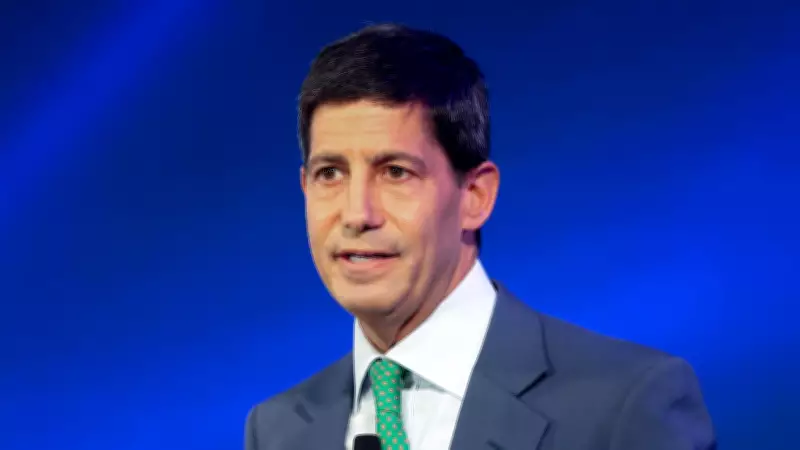
Trump's Federal Reserve Nominee Kevin Warsh Draws Criticism Over Inflation Stance and Political Ties
President Donald Trump's recent selection of Kevin Warsh to lead the Federal Reserve has ignited a contentious debate in Washington, focusing on his historical economic predictions and perceived political motivations. Warsh, a former member of the Fed's Board of Governors, spent the years surrounding the Great Recession—a period marked by soaring unemployment and plummeting inflation—arguing that the nation needed to remain vigilant against inflation risks that ultimately never materialized.
Controversial Inflation Warnings During Economic Crisis
In April 2009, as the unemployment rate climbed to 9% and inflation dipped below zero, Warsh told his Federal Reserve colleagues, "I continue to be more worried about upside risks to inflation than downside risk." This stance, now viewed by critics as misguided, highlights a pattern of caution against inflation during a time when deflationary pressures were more pressing. Many economists and observers note that this perspective was shared by numerous Republicans during and after the Great Recession, even as inflation remained conspicuously absent from the economic landscape.
Political Alignment and Flip-Flop on Monetary Policy
Warsh's nomination on Friday has raised concerns about his independence, particularly given his apparent shift in monetary policy views following Trump's rise to power. Previously focused on inflation risks, Warsh has since criticized the Federal Reserve for maintaining interest rates that he deems too high, aligning more closely with Trump's preference for lower rates to stimulate borrowing and spending. This reversal is central to the case against him, with opponents arguing it demonstrates political opportunism rather than steadfast economic leadership.

Senator Elizabeth Warren (D-Mass.) voiced strong objections, telling reporters at the Capitol, "He wants to say whatever Donald Trump wants him to say. He needs to show some independence. So far, all he has done is shown that he would be an excellent sock puppet for Donald Trump." Warren's comments underscore fears that Warsh's loyalty to Trump could undermine the Federal Reserve's traditional independence from political interference, a cornerstone of its credibility.
Background and Potential Regulatory Impact
Warsh, trained as a lawyer rather than an economist, was appointed to the Federal Reserve's Board of Governors in 2006 at age 35, becoming its youngest-ever member. His personal connections include marriage to the daughter of Ronald Lauder, a billionaire GOP donor who contributed $5 million to Trump's super PAC last year, adding to perceptions of political entanglement.
If confirmed, Warsh is expected to pursue a traditional Republican deregulatory agenda, according to Graham Steele, a fellow at Stanford University's Rock Center for Corporate Governance and former Treasury Department official. Steele warned, "Should he be confirmed, we're going to see a continuation of some of the misguided policy this administration is already doing, of weakening the rules that constrain Wall Street, deregulating the financial system in a way that had bad consequences for Main Street like the last time he was at the Federal Reserve. You've seen this movie before." This suggests potential shifts in bank regulation that could favor financial institutions over broader economic stability.
Current Economic Context and Nomination Challenges
In recent statements, Warsh has lobbed populist criticism at the Federal Reserve, suggesting that interest rates should be lower and blaming the institution for failing to preempt inflation. He has proposed that selling off some of the Fed's financial assets could create room for rate reductions without sparking inflation, and has even claimed that artificial intelligence will exert downward pressure on prices. In a November Wall Street Journal op-ed, he argued, "Americans would benefit from higher take-home pay and greater purchasing power if only the Federal Reserve's leadership stopped defending its mistakes and started correcting them."

However, Warsh's nomination faces significant hurdles in the Senate. Senator Thom Tillis (R-N.C.), a member of the banking committee, has pledged to block any nominees while the Trump Justice Department continues its criminal investigation of current Fed Chair Jerome Powell. Tillis stated, "Protecting the independence of the Federal Reserve from political interference or legal intimidation is non-negotiable," though he described Warsh as well-qualified. This political standoff complicates the path to confirmation, reflecting broader tensions over the Fed's role and autonomy.
The Federal Reserve's recent actions, including raising interest rates in 2022 to combat inflation—a move that largely succeeded without spiking unemployment—contrast with Warsh's current advocacy for lower rates. This divergence highlights ongoing debates about monetary policy effectiveness and the balance between stimulating growth and controlling inflation in a post-pandemic economy.





