

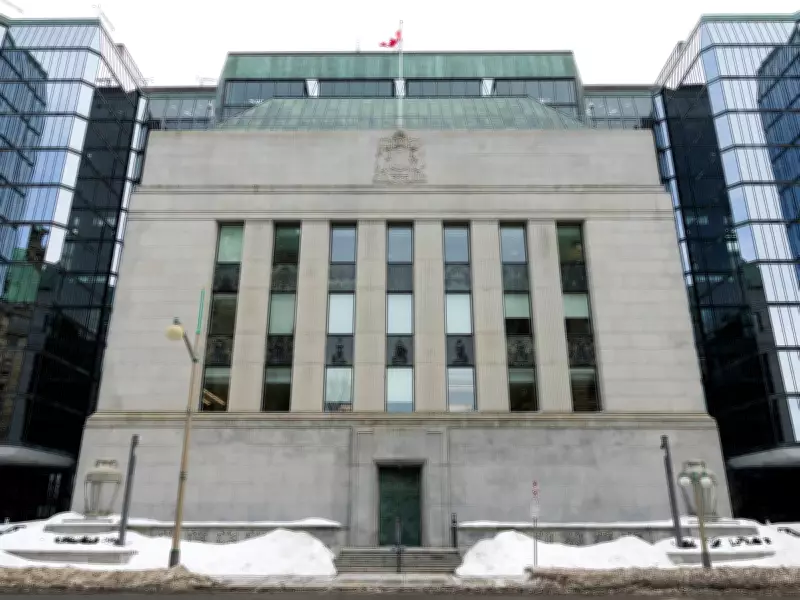
The Bank of Canada commands substantial authority in financial circles, with its pronouncements directly influencing the borrowing costs for millions of Canadian homeowners. As a cornerstone institution, it indirectly determines mortgage payments for over ten million citizens through its monetary policy decisions.
The Communication Strategy of Central Banking
However, whether by design or circumstance, Canada's central bank has developed patterns of communication that systematically steer public perception in particular directions. Despite generally positive intentions, these directional signals don't always align with borrowers' financial interests—sometimes with substantial monetary consequences.
The Infamous "Transitory" Inflation Episode
The most glaring recent example emerged during the 2021 inflation crisis, when the Bank of Canada joined other central banks in characterizing rising prices as temporary phenomena. This reassurance came mere months before policymakers embarked on the most aggressive rate-hiking campaign in over thirty years.

What central bankers labeled "transitory" inflation ultimately triggered a monumental policy response: the prime rate soared 475 basis points within just seventeen months. This represented the largest percentage increase in Canadian history, jumping from 2.45 percent to 7.20 percent.
By the time the Bank of Canada implemented serious tightening measures, inflation had already reached 5.7 percent—370 basis points above its mandated target. This delayed response proved analogous to arriving at a blazing fire with merely a garden hose after the structure has already been consumed by flames.
Systemic Patterns in Central Bank Forecasting
Such miscalculations are hardly isolated incidents. Financial historians have documented consistent patterns where central banks minimize or underestimate inflation during the initial phases of inflationary cycles. Multiple factors contribute to this recurring phenomenon.
Market-Sensitive Communication
Firstly, central banks recognize their statements frequently move financial markets more powerfully than economic data itself. If the Bank of Canada signals premature alarm about inflation, it can initiate self-reinforcing cycles where bond yields spike, mortgage rates surge, and financial conditions tighten abruptly.
Consequently, policymakers face built-in incentives to characterize emerging inflation as temporary until economic data renders that position indefensible. The term "transitory" has since been virtually eliminated from central banking vocabulary following its problematic application during the recent crisis.
Forecasting Limitations
Secondly, inflation projections from central banks demonstrate documented tendencies to undershoot during early stages of price acceleration. The Bank of Canada, U.S. Federal Reserve, European Central Bank, and other major institutions all lagged behind the curve throughout 2021-2022.
This forecasting challenge stems partly from technical modeling issues—with systems calibrated for low-inflation environments that proved inadequate for new economic realities—and partly from institutional caution. No policymaker wishes to trigger premature alarm during what might prove a false inflation signal.
Deliberate Ambiguity
Thirdly, central bankers rarely possess certainty about where inflation will stabilize until momentum has already developed. This uncertainty encourages carefully hedged language including phrases like "monitoring closely," "data-dependent," and "risks are balanced."
While these expressions sound reassuring initially, they essentially translate to "we remain uncertain about future developments." Such linguistic caution serves institutional purposes but provides limited practical guidance for borrowers and investors making critical financial decisions.
Implications for Rate Watchers and Borrowers
The consistent pattern suggests financial analysts and mortgage holders should maintain healthy skepticism toward central bank communications. While the Bank of Canada remains a fundamentally credible institution, its statements often serve strategic purposes beyond simple information transmission.

Rate watchers would benefit from examining underlying economic data with equal or greater scrutiny than official pronouncements. Historical evidence demonstrates that central bank forecasts, particularly during inflation inflection points, require substantial independent verification before informing significant financial commitments.
As the Bank of Canada continues refining its economic models and communication approaches, market participants should remember that institutional incentives sometimes diverge from borrower interests. The substantial costs borne by Canadians during recent rate increases underscore the practical importance of questioning official narratives while maintaining awareness of systemic communication patterns.





