

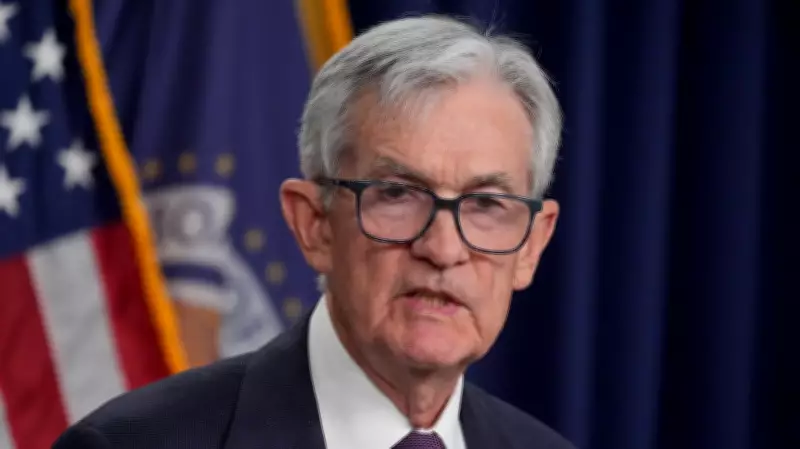
Fed Chair Powell Pledges to Remain Amid Ongoing Justice Department Investigation
Federal Reserve Chair Jerome Powell declared on Wednesday that he has "no intention" of stepping down from his position at the central bank until a Justice Department investigation into his testimony regarding a building renovation is fully resolved. Powell's term as Fed chair is set to conclude on May 15, though he retains the option to continue serving on the board as a Fed governor to complete his term. President Donald Trump has nominated Kevin Warsh, a former senior Fed official, to succeed Powell as chair.
In a recent development, a judge dismissed two subpoenas issued by the Justice Department to the Federal Reserve last Friday, delivering a setback to the investigation. However, U.S. Attorney Jeannine Pirro has announced plans to appeal this decision, keeping the probe active.
Fed Maintains Interest Rates Amid Economic Uncertainty from Iran War
Federal Reserve officials left short-term interest rates unchanged at approximately 3.6% during their Wednesday meeting, marking the second consecutive session without adjustments. In their official statement, the central bank acknowledged that the "implications of developments in the Middle East for the U.S. economy are uncertain." Despite this, policymakers anticipate that the conflict in Iran will exacerbate inflation this year while having minimal impact on overall economic growth.

The Fed's projections indicate a single rate cut in 2026, consistent with their December forecasts. This suggests that officials expect the surge in gas prices resulting from the war to have a largely temporary effect on inflation and the broader economy. Policymakers also maintain an optimistic outlook, forecasting that the unemployment rate will remain steady at 4.4% by year-end, a more positive view than many external economists hold.
Inflation Projections and Economic Impacts
Fed officials have revised their inflation forecast upward, now predicting that inflation will reach 2.7% by the end of this year, up from their December estimate but slightly below the 2.8% recorded in January. Core inflation, which excludes volatile food and energy prices, is also expected to finish the year at 2.7%, an increase from the previous forecast of 2.5%. The Fed regards core prices as a more reliable indicator of long-term inflation trends.
Speaking at a press conference following the rate decision, Powell noted that higher oil and gas prices will likely elevate inflation in the short term, but the full economic repercussions remain uncertain. "The U.S. economy is doing pretty well, it's just we don't know what the effects of this will be, and really no one does," Powell stated.
The central bank projects that inflation will decline to 2.2% in 2027 and achieve the Fed's 2% target by 2028. Additionally, officials foresee the economy growing by 2.4% this year, a slight improvement from the 2.3% forecast in December, with no sustained impact on growth or unemployment from the war.
Dissenting Voice and Market Reactions
One Fed official, Governor Stephen Miran, dissented from the decision, advocating for a quarter-point rate cut. Miran, appointed by President Donald Trump in September, expressed a differing view on monetary policy. Meanwhile, gas prices surged to a national average of $3.84 per gallon on Wednesday, according to AAA, representing a 92-cent increase from the previous month. This spike is expected to drive inflation higher in March, though core inflation may be less affected due to its exclusion of gas prices.
Historical Context and Future Outlook
Typically, the Federal Reserve would overlook supply shocks, such as disruptions in oil supplies from the Middle East, and their inflationary effects, assuming that inflation would normalize once the shock subsides without requiring rate hikes. However, following the pandemic-induced inflation surge in 2021, which Powell initially dismissed as "transitory" before it peaked at a four-decade high in June 2022, many Fed officials are cautious about repeating past mistakes.

This week's meeting is among Powell's final sessions as chair, pending the confirmation of his successor. If Kevin Warsh is not confirmed by May 15, Powell could continue to lead the Fed's rate-setting committee until a replacement is appointed. The nomination has faced delays in the Senate, with key Republican senators raising objections linked to the Justice Department investigation into Powell.
Even prior to the Iran war, challenges emerged in inflation and employment data, complicating the Fed's position. In January, prices rose more rapidly than in recent months, with core inflation reaching 3.1% year-over-year, indicating persistently elevated price increases. Concurrently, hiring weakened, with employers shedding 92,000 jobs in February after a gain of 130,000 in January, pushing the unemployment rate up slightly to 4.4% from 4.3%.
The ultimate accuracy of the Fed's forecasts will heavily depend on the duration and severity of the Middle East conflict, underscoring the delicate balance policymakers must strike in navigating economic uncertainties.





