

Onex CEO Le Blanc Emulates Buffett with Major Insurance Investment Strategy
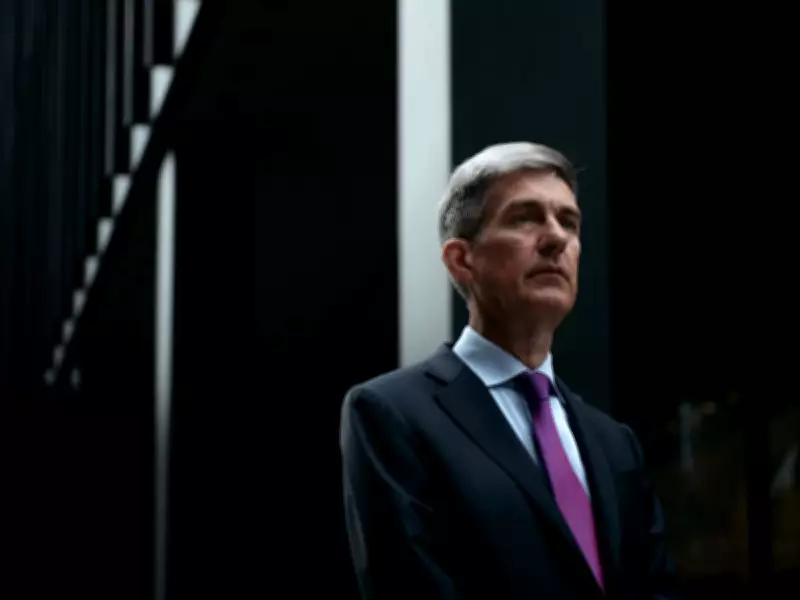
Bobby Le Blanc, the chief executive of Onex Corp., is channeling legendary investor Warren Buffett with a significant bet on the insurance sector, aiming to fundamentally alter the composition of the company's balance sheet and shift investor perceptions. This strategic move comes as the Toronto-based alternative investment firm seeks to emerge from a prolonged period of underperformance relative to its larger rivals.
A Rocky Start and Profitable Turnaround
Onex's initial foray into insurance began with an investment in Convex Group, a startup that faced immediate challenges. The venture coincided with a series of catastrophic events, including the global pandemic, a severe deep freeze in Texas, and Hurricane Ian's devastating path through the Caribbean and Florida in 2022, which became one of the costliest storms in recorded history. Paul Brand, Convex Group's chief executive, described the early phase as witnessing "nothing but essentially money going out the door."
However, drawing on over three decades of underwriting experience, Brand understood that disasters and unfavorable conditions often follow cyclical patterns. True to this insight, Convex Group has transformed into a highly profitable entity in recent years, prompting Onex to double down on its commitment.

Securing Long-Term Control and Strategic Alignment
Last month, Onex finalized a pivotal deal that grants it long-term control of Convex Group. This transaction is partially funded by American International Group Inc., which will subsequently become one of Onex's largest shareholders. This acquisition represents the most radical strategic shift under Le Blanc's leadership since he assumed the CEO role in May 2023.
Le Blanc's strategy explicitly mirrors Warren Buffett's approach at Berkshire Hathaway Inc., where insurance operations form the core of the US$1 trillion conglomerate. The move also aligns Onex with other major investment firms like Apollo Global Management Inc. and KKR & Co., which have similarly developed insurance divisions to harness the steady capital flow characteristic of the industry.
Addressing Market Perception and Shareholder Value
Onex has historically lagged behind competitors such as Brookfield Corp., Blackstone Inc., and KKR, attributed in part to weaker returns from its flagship private equity group, Onex Partners, which has not raised a major new fund since 2017. A telling indicator of market sentiment is the company's stock valuation: despite holding approximately $170 per share in investments and carrying no debt as of December, its stock price remains just below $100. Furthermore, analyst coverage has dwindled to only three sell-side analysts.
Le Blanc, who spent several years at Berkshire Hathaway in the 1990s, articulated his rationale during an interview at Onex's Bay Street headquarters in Toronto. "The more shareholders I spoke to, the more I realized that we were never going to get the credit for the intrinsic value of the business under the way that we've historically operated," he stated. "So I said: 'How can we change the narrative around Onex to become more of an earnings or enterprise-value play, versus a net-asset-value play?'"
High Stakes Amid Leadership Transition
The insurance bet carries significant stakes for Onex, founded in 1984 by Gerry Schwartz. Schwartz's special voting rights are set to expire in May, concluding decades of his control over the firm. In its early days, Onex operated on a deal-by-deal fundraising model, consistently retaining a substantial portion of each transaction for itself. Le Blanc's current strategy marks a deliberate departure from this historical approach, aiming to reposition Onex for renewed growth and market recognition.






