

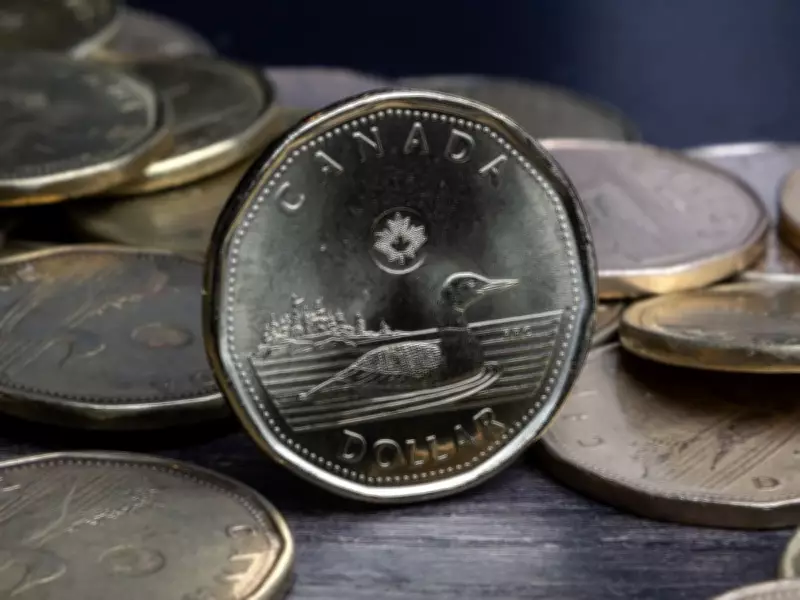
Canadian Dollar's Resilience Faces Test as Central Bankers Convene
The Canadian dollar, one of the most resilient currencies in early March, now faces significant risks as the nation's central bankers gather this week to assess a weakened economy. The loonie's outperformance has shown clear signs of waning, failing to catch up with the rebound observed across other developed-nation currencies.
Wall Street Takes Negative View Ahead of Bank Meeting
Tim Baker, Deutsche Bank's head of foreign-exchange research for the Americas, represents a growing number of Wall Street analysts taking a more negative stance on the loonie ahead of Wednesday's Bank of Canada meeting. While the central bank is widely expected to maintain its key rate at 2.25 percent, Baker warns that officials' tone could be sufficient to pressure the currency downward.
"They could shift to sound more concerned about a lack of growth," Baker explained. "That would pave the ground for a material dovish repricing in interest rates relative to Group-of-10 peers, dragging the Canadian dollar down."

Fading Resilience and Economic Data Concerns
The loonie's relative resilience compared to Group-of-10 peers, which was evident following the United States' attack on Iran and subsequent energy price spikes, has already begun to fade. The currency remains little changed against the U.S. dollar this week around 1.37, representing a decline of approximately 0.4 percent against the U.S. currency this month.
Recent economic data has raised additional concerns. Friday's release revealed the Canadian economy lost the most jobs in over four years last month, driving unemployment up to 6.7 percent. While inflation slowed more than anticipated, focus has shifted to the risk of global resurgence as Middle East conflicts continue to keep energy prices elevated.
Market Expectations and Analyst Perspectives
Market participants and economists widely anticipate the Bank of Canada will maintain its policy rate at 2.25 percent on Wednesday. Beyond this meeting, traders in the swap market continue pricing in approximately 25 basis points worth of rate increases by year's end. This represents a significant shift from late February, when markets had priced in about 30 percent chance of a quarter-point cut during the same period.
Mark McCormick, chief FX strategist at BMO Capital Markets in Toronto, expressed concern about current market pricing. "Rates are likely on hold, rhetoric cautious, and markets may be over-pricing the probability of hikes unless oil prices stay elevated for longer," McCormick stated. "None of this bodes well for the Canadian dollar."
Diverging Views on Currency Positioning
Deutsche Bank's Baker prefers selling the Canadian dollar against both its U.S. and Australian counterparts. He also believes the loonie could experience sudden declines against the euro if tensions surrounding Iran diminish. Morgan Stanley analysts Molly Nickolin and Andrew Watrous reinforced this view in a Tuesday note, suggesting the loonie could slide against the dollar if investors adopt more neutral positions in the rates market.
However, some analysts see potential strength for the Canadian dollar under specific circumstances. Elias Haddad, global head of markets strategy at Brown Brothers Harriman, notes the loonie could strengthen against currencies of countries like Japan and India that rely heavily on imported oil and gas and have weaker fiscal foundations, particularly if longer-term conflicts lead to protracted energy market disruptions.
Bipan Rai, a managing director at BMO Asset Management in Toronto, cautions that current pricing of rate hikes by year's end appears inconsistent with recent economic data and emerging risks. As central bankers convene this week, the Canadian dollar's trajectory hangs in the balance between domestic economic weakness and global energy market uncertainties.






