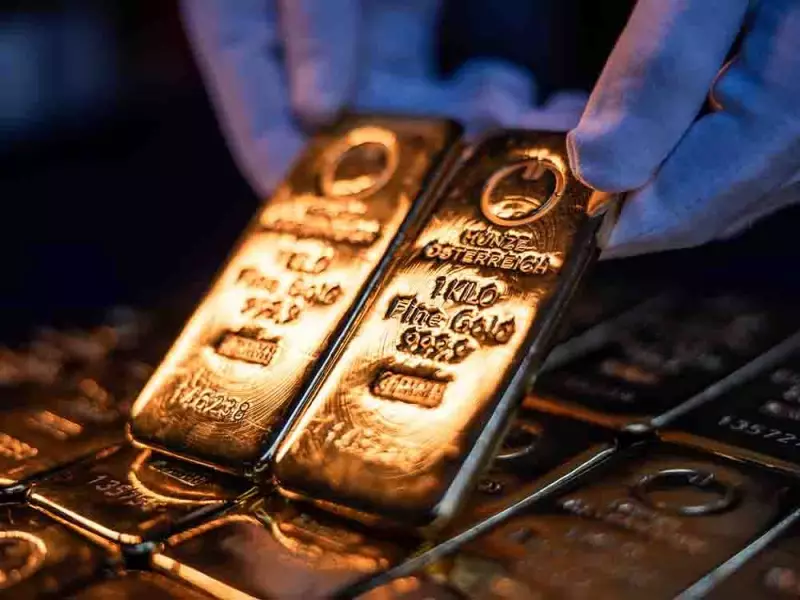
Gold Approaches $5,000 Per Ounce as Weaker Dollar Fuels Record Rally
Gold is closing in on the historic $5,000 per ounce threshold, propelled by a combination of a weakening U.S. dollar, geopolitical uncertainties, and renewed threats to the Federal Reserve's independence. This surge marks a continuation of a blistering rally that has captivated global markets.
Record Highs Across Precious Metals
On Friday, bullion climbed to a record above $4,967 per ounce, positioning itself for a weekly gain of nearly eight percent. This upward momentum is largely supported by a softer dollar, with a key gauge of the U.S. currency on track for its poorest performance in seven months. The weaker dollar makes precious metals more affordable for international buyers, further driving demand.
Silver advanced to an all-time high just below $100 per ounce, while platinum also reached a peak. Silver, in particular, has more than tripled over the past year, benefiting from a historic short squeeze and a wave of retail buying that has left banks and refiners scrambling to meet unprecedented demand.

Geopolitical and Economic Drivers
Geopolitical risks are playing a significant role in gold's ascent. Recent military interventions in Venezuela, threats to annex Greenland, and ongoing tensions in Ukraine have heightened investor anxiety. Yuxuan Tang, head of macro strategy in Asia at J.P. Morgan Private Bank, noted, "Gold is undergoing a sustained re-rating as cracks appear in the post-World War II rules-based order. Investors increasingly view gold as a reliable protection against these hard-to-quantify regime-shift risks."
Additionally, renewed attacks on the Federal Reserve by U.S. President Donald Trump have added impetus to the so-called debasement trade. In this strategy, investors move away from sovereign bonds and currencies, favoring alternative havens like gold. Ahmad Assiri, a strategist at Pepperstone Ltd Group, commented, "Gold supply is just not enough to diversify U.S. market and political tension, which makes price ceilings rather fragile."
Institutional and Central Bank Activity
Fresh from its best annual performance since 1979, bullion has extended its breakneck rally, gaining an additional 15 percent in the early part of this year. Goldman Sachs Group Inc. has responded by lifting its year-end gold price forecast to $5,400 per ounce from a previous estimate of $4,900, citing intensifying demand from private investors and central banks.
Central banks are actively increasing their gold reserves in anticipation of further geopolitical instability. Poland's central bank, which ranks first globally in reported gold purchases, approved plans this week to buy another 150 tons. Meanwhile, India's holdings of U.S. Treasuries have fallen to a five-year low as gold and other alternatives take a larger share, reflecting a broader shift by some major economies away from the world's largest bond market.
Market Outlook and Key Developments
Investors are now closely monitoring several key developments. The selection of the next Federal Reserve chair by President Trump is a focal point, as a more dovish leader could increase bets on further interest-rate cuts this year, which would be positive for non-yielding bullion. Markets are also watching the outcome of talks between Russian President Vladimir Putin and U.S. envoys regarding a proposed peace plan for Ukraine, which could influence global risk sentiment.
This rally underscores gold's enduring appeal as a safe-haven asset during times of economic and political uncertainty, with analysts predicting continued strength as these factors persist.