

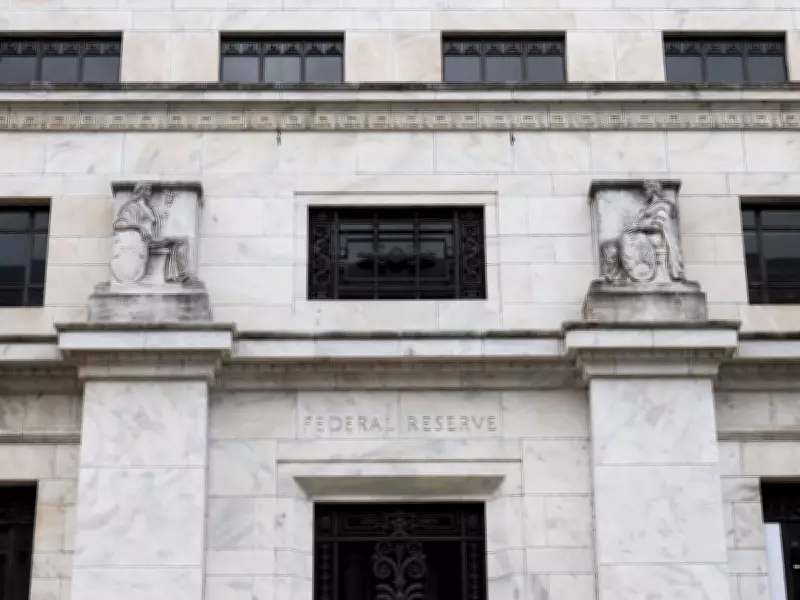
The Federal Reserve's Critical Blind Spot on Oil Shocks
The ongoing oil supply shock is generating significant turbulence across global financial markets, with investors hastily adjusting portfolios amid heightened uncertainty. However, a crucial element missing from much economic analysis is how this shock interacts with Federal Reserve policy decisions, political pressures, and international capital movements. These interconnected factors are leading to substantial market misjudgments with profound implications for both investments and broader economic stability.
Historical Patterns Versus Current Reality
Historically, rising oil prices have typically coincided with a weakening U.S. dollar during demand-driven market rallies. In such environments, robust global growth, increasing risk appetite, and capital flowing toward non-U.S. assets create conditions where oil strengthens as part of a broader "risk-on" cycle. The dollar often softens during these periods as investors rotate toward cyclical assets, emerging-market currencies, and commodity-linked investments. This negative correlation between oil and the dollar emerges more from shared demand and risk conditions than from any fixed pricing rule.
In stark contrast, supply-driven oil shocks like the current situation can produce the opposite effect: simultaneous increases in both oil prices and the U.S. dollar. During these episodes, elevated oil prices tighten global financial conditions, amplify inflation risks, and heighten economic uncertainty. This drives safe-haven capital flows into the dollar while pushing U.S. yields higher as markets anticipate a "higher-for-longer" monetary policy trajectory from the Federal Reserve.

Gold Under Pressure and Political Complications
Gold investments are facing particular pressure as nations seek dollar liquidity to offset the impact of higher oil prices, which are predominantly priced in U.S. dollars. This renewed dollar strength, combined with rising yields, directly contradicts the stated objectives of the Trump administration, which has advocated for a weaker currency to improve the U.S. trade balance and lower interest rates to finance substantial government deficits.
The recent Federal Open Market Committee meeting reinforced market expectations that near-term interest rate cuts are unlikely, contributing to both dollar strength and a notable pullback in gold prices. The FOMC voted to maintain current interest rates, signaling a commitment to restrictive monetary policy that appears increasingly misaligned with underlying growth dynamics.
Economic Impact and Recession Risks
At current consumption levels, the recent gasoline price increases following the oil supply shock are imposing an estimated US$300–US$350 million daily "tax" on American consumers, according to petroleum analysis expert Patrick De Haan. Annualized, this economic drag approximates the impact of approximately 50 basis points in interest rate hikes, though it operates through household cash flow channels rather than traditional financial conditions.
Critically, higher gasoline prices disproportionately affect lower- and middle-income households, directly eroding purchasing power and reinforcing late-cycle downward growth pressures even as headline inflation temporarily rises. This creates a dangerous scenario where the Federal Reserve's policy approach risks exacerbating economic vulnerabilities rather than addressing them.
Markets are reacting to what appears to be an overly hawkish policy path that assumes prolonged restrictive conditions, despite mounting evidence that this stance conflicts with underlying growth realities. The ongoing supply-driven oil shock, if sustained, threatens to push global economies into a full-blown recession, making the Federal Reserve's apparent blind spot to these dynamics particularly concerning for investors across asset classes.






