

Federal Reserve Maintains Current Interest Rates Amid Global Uncertainty
The Federal Reserve has decided to keep interest rates steady while continuing to project one quarter-point rate cut in 2026 and another in 2027, according to officials' latest projections released Wednesday. This marks the second consecutive meeting where policymakers have held rates in place, though the economic landscape has shifted significantly since their previous gathering.
Middle East Conflicts Introduce Economic Uncertainty
Federal Reserve officials acknowledged increased uncertainty stemming from ongoing conflicts in the Middle East, stating in their post-meeting announcement that "the implications of developments in the Middle East for the United States economy are uncertain." The committee emphasized its attentiveness to risks affecting both sides of its dual mandate of maximum employment and price stability.
The Federal Open Market Committee voted 11-1 to maintain the benchmark federal funds rate within a range of 3.5 percent to 3.75 percent. Governor Stephen Miran dissented from the majority decision, advocating for a quarter-point reduction in rates.

Economic Backdrop Shows Significant Changes
Since the Fed's January meeting, the economic environment has undergone substantial transformation. Initially, policymakers expressed growing confidence that the unemployment rate was stabilizing, with several officials indicating intentions to maintain rates at current levels for an extended period to help reduce inflation.
However, a weaker-than-expected February employment report introduced fresh doubts about labor market stability. Additionally, U.S.-Israeli military actions against Iran that commenced on February 28 have triggered a surge in global oil prices, creating potential threats to both inflation control and economic growth.
Revised Economic Forecasts and Market Reactions
In their updated economic projections, Federal Reserve officials slightly improved their growth outlook for 2026 to 2.4 percent, up from the 2.3 percent forecast in December. The unemployment rate projection remained unchanged at 4.4 percent for the end of 2026.
Notably, policymakers raised their inflation forecast for 2026 to 2.7 percent from the previous 2.4 percent estimate. They also projected that core inflation, which excludes volatile food and energy categories, would similarly increase to 2.7 percent.
Market reactions to the Fed's announcement were mixed. The S&P 500 remained lower following the decision, while Treasury yields retreated after earlier gains. Investors responded to Middle East tensions by scaling back expectations for rate cuts in 2026, though federal funds futures pricing still indicates anticipation of one reduction by year's end.
Policy Considerations and Leadership Transition
Central bankers typically avoid raising interest rates when energy prices spike, as the inflationary impact is often temporary. This approach depends on maintaining public confidence that inflation will eventually settle around the Federal Reserve's two percent target. After five years of elevated inflation, some policymakers express concerns that inflation expectations could gradually increase, though most survey and market-based measures currently remain within acceptable ranges.
The Fed's decision comes amid a potential leadership transition, with Chair Jerome Powell's term set to expire in May. Former President Donald Trump has nominated Kevin Warsh, a former Federal Reserve governor, as Powell's potential replacement. Trump has publicly called for an immediate rate cut, adding another dimension to the ongoing monetary policy discussions.
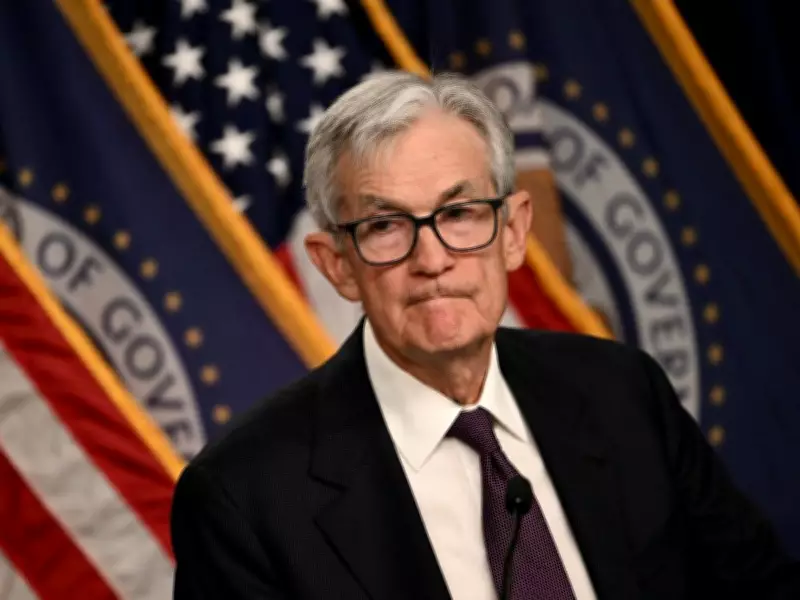
Fed Chair Jerome Powell is scheduled to hold a press conference at 2:30 p.m. in Washington to provide further details and context regarding the committee's decisions and economic outlook.






