

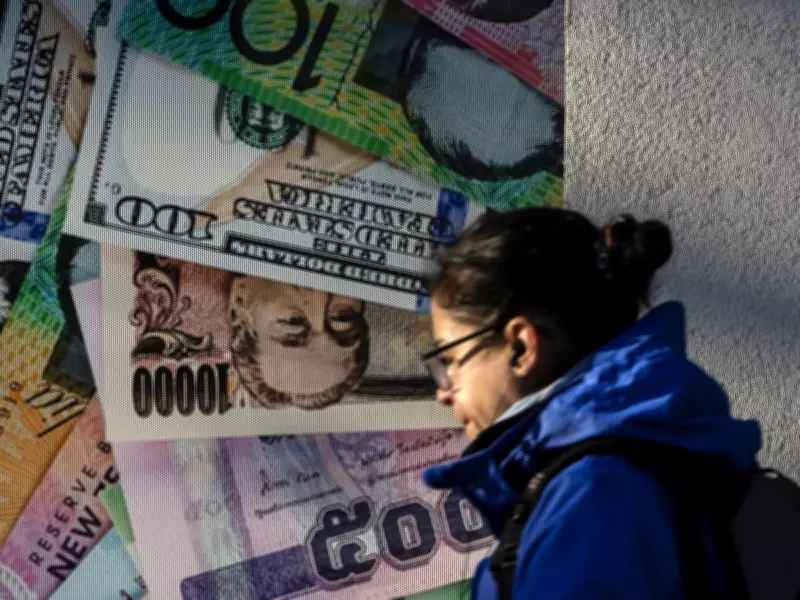
Emerging Market Currencies Stage Full Recovery as Traders Bet on Peace
A key benchmark tracking emerging-market currencies has completely recovered its losses from the start of the United States-Iran war, driven by growing optimism that the conflict is de-escalating following Iran's announcement that it has reopened the vital Strait of Hormuz to commercial traffic.
Market Rally Fueled by Geopolitical Developments
The MSCI Emerging Markets Currency Index climbed 0.6 percent to reach 1,884.37 points on Friday, marking a significant turnaround from the turmoil that has characterized global financial markets since late February. This recovery comes directly after Iran declared the Strait of Hormuz "completely open," a move that immediately sent oil prices tumbling more than 10 percent, with Brent crude trading around $86 per barrel.
The dramatic drop in oil prices reflects renewed market confidence that an end to the conflict may be in sight, according to analysts who note that lower energy costs particularly benefit emerging economies that are net importers of oil.

Analysts Point to Improved Sentiment
"While there might still be some doubts over whether shipping is fully back to normal, the market seems to think the worst is behind us," said Dan Pan, an economist at Standard Chartered Bank in New York. "Lower oil prices have also supported the rally among some energy importers in emerging markets."
Iran's announcement follows earlier claims by former U.S. President Donald Trump that concessions by Tehran would pave the way for a deal to end the war, which has been choking off critical energy supplies from the Persian Gulf region. Trump subsequently stated that the U.S. naval blockade of the vital transit route would remain until "our transaction with Iran is 100 percent complete."
Broader Market Recovery Underway
The conflict, which began at the end of February, has created chaos across global financial markets, sending Brent crude prices briefly near $120 per barrel and causing significant stock market declines. Notably, a gauge tracking emerging-market equities is also approaching the point of erasing all losses sustained since the war's onset.
"We remain constructive overall, as valuations and positioning have both reset, and earnings growth is likely to be strong per our baseline macro assumptions," wrote Goldman Sachs strategists led by Kamakshya Trivedi in an April 15 research note.
The recovery extends beyond emerging markets, with the S&P 500 Index having erased its war losses earlier this week, bolstered in part by stronger-than-expected corporate earnings reports.
Significant Reversal from February Turmoil
The emerging-market currency rebound represents a dramatic shift from the market conditions that prevailed immediately after the conflict began. The war's outbreak triggered widespread volatility, tanking stocks and sending commodity prices soaring as traders feared prolonged disruption to global energy supplies.
The reopening of the Strait of Hormuz—through which approximately one-fifth of the world's oil passes—has been viewed as the most concrete sign yet that tensions may be easing, though analysts caution that the situation remains fluid and dependent on continued diplomatic progress.
Market participants will be closely monitoring whether the currency gains can be sustained and whether the equity recovery in emerging markets follows the same trajectory as the currency rebound in the coming trading sessions.






