

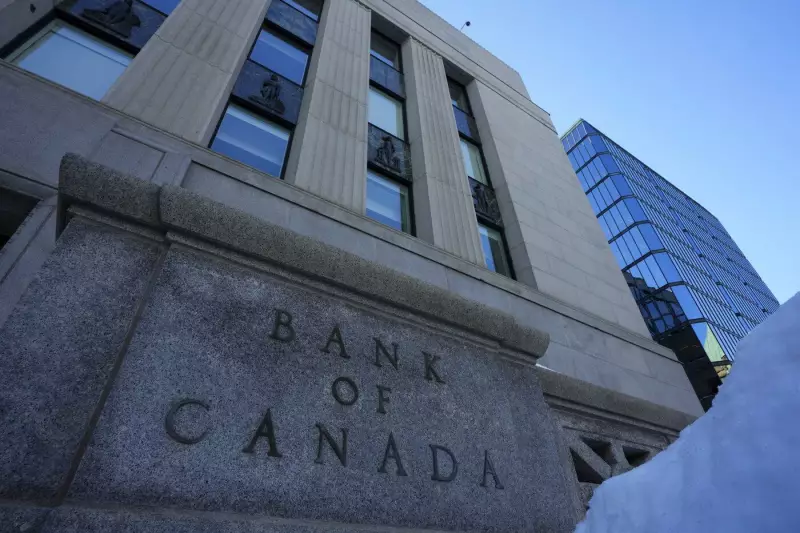
Economists React to Bank of Canada's Interest Rate Hold Amid Inflation Concerns
The Bank of Canada has opted to maintain its key interest rate at 2.25%, a decision announced on January 28, 2026, that reflects what Governor Tiff Macklem described as a period of heightened economic uncertainty. This move comes as policymakers grapple with persistent inflation worries and the potential for future monetary easing.
Central Bank's Cautious Stance on Monetary Policy
In his statement, Governor Macklem emphasized the delicate balance the central bank is attempting to strike. The ongoing review of the Canada-United States-Mexico Agreement (CUSMA) was cited as an important risk to the Bank's economic projections, adding another layer of complexity to the decision-making process. The hold suggests that while inflation remains a concern, the BoC is not yet ready to pivot toward rate cuts without clearer signals of economic softening.
Expert Analysis on Potential Rate Cuts
Economists have been quick to analyze the implications of this decision. Royce Mendes, an economist with Desjardins, noted that an economic shock would likely prompt the Bank to cut rates, indicating that the current hold is contingent on stable economic conditions. This perspective highlights the conditional nature of monetary policy in the current climate, where external factors could swiftly alter the trajectory.

Other analysts point to the broader context of global monetary policy, including the U.S. Federal Reserve's recent decision to leave rates unchanged while citing elevated inflation. The alignment or divergence of central bank actions across borders adds to the uncertainty faced by Canadian policymakers.
Broader Economic and Political Context
The rate hold occurs against a backdrop of varied economic indicators and political developments. For instance, discussions around CUSMA reforms and foreign influence registries underscore the interconnectedness of trade and policy. Meanwhile, provincial leaders like Ontario's Doug Ford and New Brunswick's premier have commented on the state of U.S.-Canada relations, suggesting that geopolitical factors may indirectly influence economic confidence.
In the business sector, reactions have been mixed, with some industries welcoming the stability of unchanged rates, while others express concern over the lingering inflation pressures that could affect consumer spending and investment decisions.
Looking Ahead: What to Expect from the BoC
As the Bank of Canada monitors key data points, including employment figures, GDP growth, and inflation metrics, future rate decisions will hinge on whether economic conditions warrant a shift. The possibility of a rate cut later in 2026 remains on the table, especially if signs of a slowdown emerge or if inflation subsides more quickly than anticipated.
For now, the hold at 2.25% signals a cautious approach, prioritizing stability over aggressive action. Economists will continue to watch for any hints from the BoC in upcoming communications, as the path forward remains finely balanced between curbing inflation and supporting economic growth.






