Global Economic Leaders Offer Contrasting Perspectives at Davos Forum
Mark Carney's stark portrayal of a fragmenting international order faced significant pushback from prominent global economic figures during discussions at the World Economic Forum in Davos. The former Bank of Canada governor's assessment of a "ruptured world" where "the rules-based order is fading" was met with more nuanced, and in some cases, directly contradictory views from leaders of major international institutions.
Lagarde Emphasizes Economic Interdependence Over Division
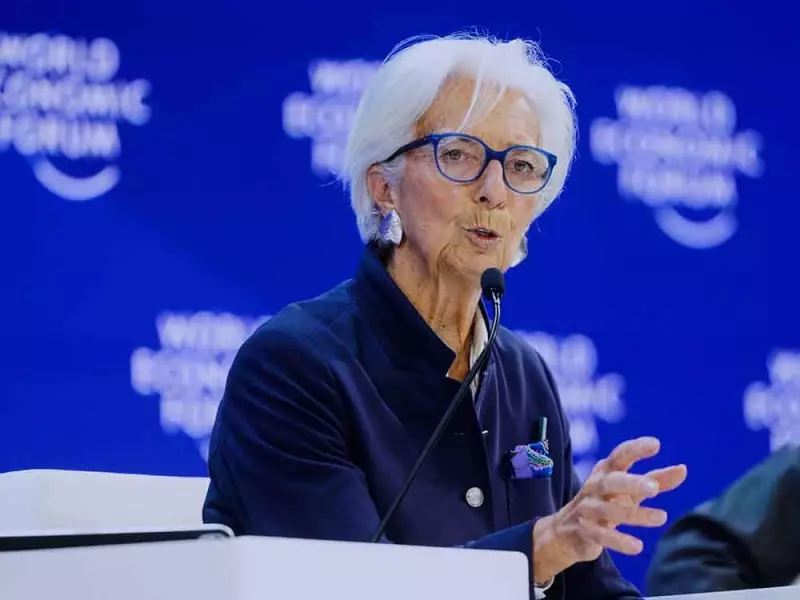
European Central Bank President Christine Lagarde offered perhaps the most direct counterpoint to Carney's perspective, stating clearly that she's "not exactly on the same page" with the Canadian prime minister regarding the state of world relations. Lagarde challenged the notion of rupture, instead emphasizing the fundamental economic connections that continue to bind nations together.
"From an economic and from a business point of view, we depend on each other," Lagarde told the final panel of the World Economic Forum. "We have these very strong links and binds. Suppliers sometimes are in a position of strength. If I look at supply and demand, we have also a position of strength, and I think that all directions have to be explored."

WTO Director-General Points to Systemic Resilience
World Trade Organization Director-General Ngozi Okonjo-Iweala echoed Lagarde's call to distinguish meaningful signals from temporary noise, while offering a perspective focused on the resilience built into the global trading system. Despite acknowledging significant disruptions, including what she described as "the biggest disruption in 80 years" to global trade, Okonjo-Iweala emphasized the underlying strength of international frameworks.
"What is happening is that in spite of all the disruptions, there is some resiliency built into the system," she explained. "Global trade rules have been undermined. But I think the system has been put together in such a way that is quite strong and it will take a lot to destroy."
Carney's Dire Warning Sparks Davos Conversation
The contrasting perspectives emerged in response to Carney's address earlier in the week, which became a major talking point throughout the forum. The Canadian leader described how "the strong can do what they can, and the weak must suffer what they must," delivering a call to action for "middle power" nations to coordinate their efforts because "if we're not at the table, we're on the menu."
Carney's comments came against the backdrop of ongoing transatlantic tensions, particularly surrounding former U.S. President Donald Trump's attempts to rewire international commerce and territorial ambitions, including his desire to annex Greenland.
IMF Managing Director Acknowledges Changing Landscape
International Monetary Fund Managing Director Kristalina Georgieva, sitting alongside Lagarde and Okonjo-Iweala, offered a somewhat more cautious perspective that acknowledged significant changes in the global landscape while stopping short of Carney's dire assessment.
"There is no question that the world is changing — it has been changing for quite some time," Georgieva noted. "We are in a more shock prone world. We get surprised by geopolitics, by technology, by climate, and we are not so accustomed to be in that kind of fast changing environment."
Middle Eastern Perspective Offers Different Historical Context
Saudi Arabian Finance Minister Mohammed Al-Jadaan provided a distinct regional perspective, suggesting that what might seem like a new development to Western nations has been a longstanding reality in other parts of the world. From his vantage point in the Middle East, Carney's view of shifting global dynamics isn't particularly novel.
"The Saudis 'have actually been living in a different world order for decades,'" Al-Jadaan observed. "Just the West is starting to experience it, and that's why they say we. But we've been living it actually for some time."

Artificial Intelligence Highlights Continuing Global Cooperation
When the discussion turned to artificial intelligence, Okonjo-Iweala used the emerging technology as another example of how the global system established in the postwar period continues to demonstrate its utility. Even in areas of rapid technological advancement, she suggested, international cooperation and established frameworks remain relevant and necessary.
The Davos exchanges revealed significant divergence in how global leaders perceive current international relations, with Carney's warning of systemic breakdown contrasting sharply with other institutional leaders' emphasis on enduring connections and adaptive resilience within the existing global framework.