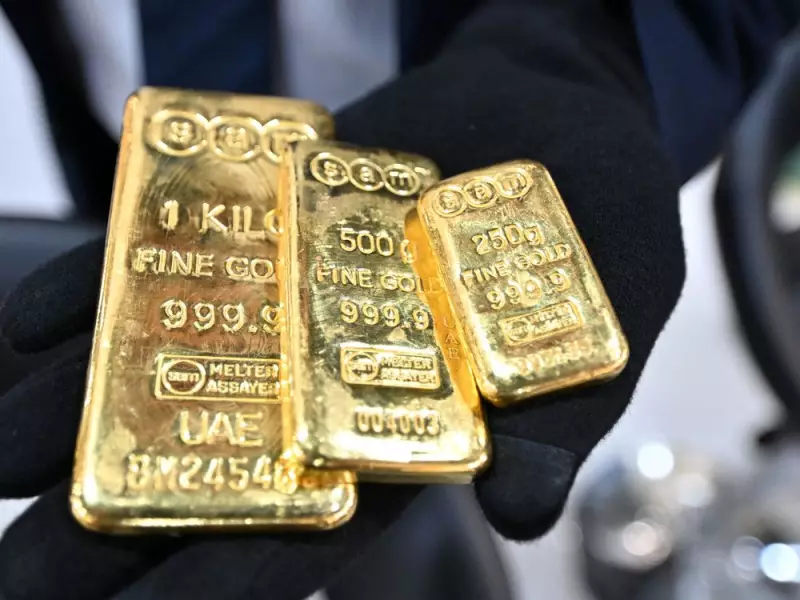
The financial world is witnessing a dramatic gold rush, but this time it's not in remote mines—it's happening on the trading floors and in the vaults of the world's largest banks and financial institutions. A historic surge in the price of gold and silver throughout 2025 has ignited a fierce competition, turning the traditionally steady business of precious metals into one of the most lucrative areas in global finance.
Record Prices Fuel a Trading Bonanza
The blistering rally for precious metals gained fresh momentum in late December 2025, propelled by simmering geopolitical tensions and expectations of interest rate cuts in the United States. This powerful combination pushed both metals to unprecedented levels. On Wednesday, December 24, the price of gold shattered the US$4,500 per troy ounce barrier for the first time ever. Simultaneously, silver crossed the significant milestone of US$70 per ounce. These peaks cap off an extraordinary year, with gold posting a 71% gain and silver skyrocketing by an astonishing 150% since January.
This price explosion has directly translated into windfall profits for financial institutions with exposure to the sector. According to data from analytics firm Crisil Coalition Greenwich, revenues from the precious metals trading desks at leading banks soared by 50% during the first nine months of 2025 compared to the same period in 2024.

"There is a big pot to be made this year, and everyone is being quite aggressive on it," stated Callum Minns, research manager at Crisil. He added that precious metals are becoming "a bigger proportion of the overall markets business" for top-tier banks. In total, precious metals trading revenues at 12 major banks reached approximately US$1.4 billion between January and September, putting 2025 on track to be the second-best year on record for gold trading, trailing only the exceptional conditions of 2020.
Banks and Non-Banks Expand in a Competitive Scramble
The lucrative opportunity is triggering a significant expansion across the industry. Banks that had previously scaled back or closed their precious metals operations are now hastily re-entering the fray. Market participants report that institutions including Société Générale, Morgan Stanley, and Mitsui have all been actively expanding their precious metals teams this year.
Furthermore, the rally is attracting fierce competition from outside the traditional banking sector. Non-bank players are rushing to increase their market share. Notable firms like Swiss refinery MKS Pamp, financial platform StoneX, and London-based broker Marex have all bolstered their bullion trading and related operations in 2025.
Michael Skinner, head of metals at StoneX, described a "democratisation of the market" underway, suggesting that the influx of new participants will benefit the overall ecosystem. StoneX, which already had a substantial physical gold trading business, has launched a Comex-approved gold vault in New York and is expanding a U.K. bullion refinery it purchased the previous year.
The New Allure of Physical Vaulting
The boom is not limited to paper trading; it has also revived interest in the physical infrastructure of the gold market—the vaults. In London, the world's largest hub for physical gold trading which clears over US$35 trillion of bullion annually, banks that are clearing members of the London market are required to maintain their own vaulting capabilities. Currently, there are only four such clearing members in the "Loco London" gold market.
This represents a stark reversal from recent trends. Owning a vault was once considered a low-margin, unglamorous business, leading banks like Barclays and Canada's own Scotiabank to sell off their vault operations in prior years. Today, in the heat of the rally, controlling physical storage and logistics has come back into vogue as a critical and potentially profitable link in the precious metals value chain.

The race to capitalize on gold's historic run underscores how swiftly market dynamics can transform a niche sector into a central profit engine. For banks, traders, and storage providers alike, the precious metals business is no longer sleepy—it's wide awake and driving a significant portion of the year's financial headlines and bottom lines.