

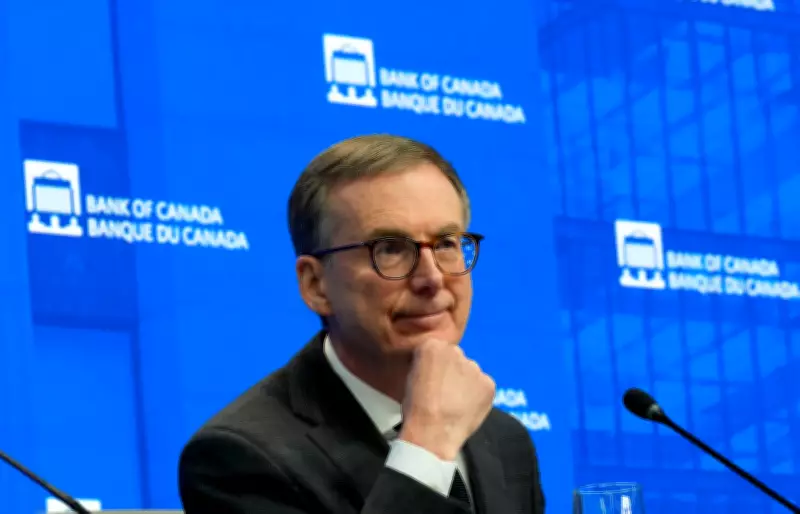
Bank of Canada Governor Highlights Unusual Risk of Economic Shock Amid Trade Tensions
In a significant address, Bank of Canada Governor Tiff Macklem has issued a stark warning about the unusual potential for a new economic shock facing the Canadian economy. His remarks, delivered on January 29, 2026, underscore growing concerns within the central bank about external vulnerabilities and their implications for monetary policy.
Focus on CUSMA Renegotiations and Interest Rate Implications
Governor Macklem specifically pointed to the ongoing renegotiations of the Canada-United States-Mexico Agreement (CUSMA) as a critical factor that could influence future interest rate decisions. He emphasized that the outcome of these trade talks, coupled with broader global trade tensions, creates an environment of heightened uncertainty. This uncertainty, Macklem noted, complicates the Bank of Canada's ability to forecast economic conditions and adjust its benchmark interest rate accordingly.
The governor's warning comes at a time when the Canadian economy is navigating multiple challenges, including inflationary pressures and shifting international trade dynamics. Macklem's statement suggests that the central bank is preparing for potential disruptions that could arise from trade policy changes, which might necessitate a more cautious or reactive approach to interest rate adjustments.

Broader Economic Context and Policy Challenges
This alert from the Bank of Canada reflects a broader trend of economic vigilance in response to volatile global conditions. The mention of an "unusual potential" for shock indicates that Macklem and his team are monitoring risks that deviate from typical economic cycles, possibly linked to geopolitical events or abrupt policy shifts in major trading partners like the United States.
Analysts interpret this as a signal that the Bank of Canada may prioritize stability over aggressive rate changes in the near term, as it assesses the impact of trade negotiations on sectors such as manufacturing, agriculture, and energy. The governor's comments also highlight the interconnectedness of trade agreements and domestic monetary policy, a relationship that has become increasingly prominent in recent years.
As Canada continues to engage in CUSMA discussions, the Bank of Canada's warning serves as a reminder of the delicate balance between fostering economic growth and safeguarding against external shocks. Stakeholders across the country will be closely watching how these trade developments unfold and influence the central bank's next moves on interest rates.






