

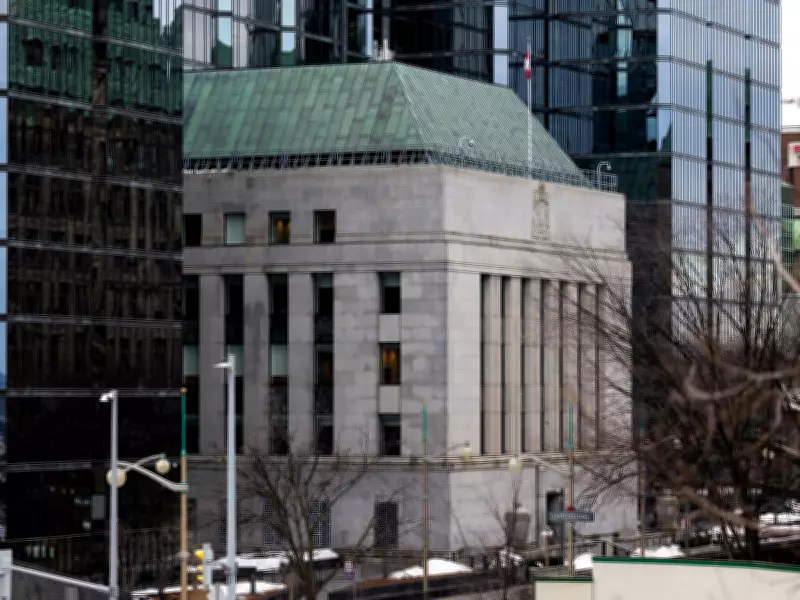
Bank of Canada Navigates Conflicting Economic Pressures
The Bank of Canada finds itself in a challenging position as surging global oil prices and a weakening domestic economy pull monetary policy in opposing directions, according to economists. Following the central bank's decision to hold its key interest rate at 2.25 percent for the third consecutive time on Wednesday, experts say there are too many uncertainties for policymakers to provide clear guidance on future rate adjustments.
Too Many Unknowns for Clear Policy Signals
Economists emphasize that numerous unpredictable factors are preventing the Bank of Canada from offering hints about potential interest rate changes. Among these uncertainties are the duration of the conflict in Iran, the economic impact of the oil-price shock on Canada, and the upcoming review of the Canada-United States-Mexico Agreement (CUSMA). These variables create what economists describe as "acute" uncertainty in the economic landscape.
Opposing Forces Create Policy Dilemma
Royce Mendes, managing director and head of macro strategy at Desjardins Group, characterized the central bank's predicament as being caught between two opposing forces. "The Bank of Canada is caught between two opposing forces: surging global energy prices and a weakening domestic economy," Mendes stated in an analytical note.

Energy prices have increased by approximately 40 percent since the beginning of the U.S.-Israel-led military action against Iran. Meanwhile, Canada's first-quarter gross domestic product (GDP) could significantly fall short of the Bank of Canada's projection for annualized growth of 1.8 percent.
Prioritizing Domestic Economic Concerns
Despite the inflationary pressure from higher oil prices, Mendes noted that policymakers appear to be prioritizing threats from the deteriorating job market, worsening business conditions, and the additional financial strain that elevated energy prices place on households. The central bank also removed language from its statement suggesting that current interest rates appeared "appropriate," though Mendes clarified this doesn't signal imminent rate increases.
"The tone of these communications reinforces our view that the Bank of Canada is willing to look through the impacts of higher energy prices on the consumer price index so long as the conflict doesn't last for too long," he explained. Desjardins expects the Bank of Canada to maintain interest rates at their current level throughout the remainder of the year.
Mixed Signals for Monetary Policy Hawks and Doves
Douglas Porter, chief economist at BMO Economics, observed that the Bank of Canada's latest interest rate decision contained "a little bit of something for both the doves and the hawks." He pointed out that Governor Tiff Macklem referenced both the weak state of the economy and the inflation threat posed by higher energy prices in his communications.
However, Porter suggested that the doves—those advocating for potential rate cuts rather than increases—ultimately gained the upper hand in this policy assessment. "The quick takeaway is that the Bank of Canada can afford to be patient over the near term," he remarked, referring to Macklem's comments that the effects of the Iran conflict appear "contained" for now.
Inflation Concerns Remain on the Radar
Despite this patient approach, Porter emphasized the importance of acknowledging Macklem's warning that if energy prices remain elevated, the central bank would not allow the effects to "broaden and become persistent inflation." While financial markets are currently anticipating a potential rate hike by year-end, Porter argued that the case for such a move appears "weak," particularly given ongoing uncertainty surrounding trade negotiations with the United States.
The Bank of Canada's balancing act continues as it monitors how these conflicting economic forces evolve in the coming months, with policymakers carefully weighing the risks of inflation against concerns about economic growth and stability.






