

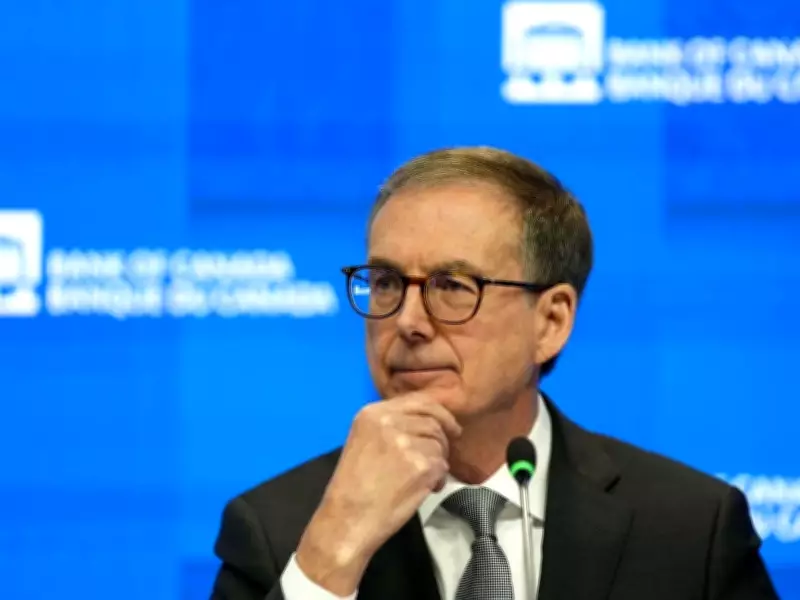
The Bank of Canada has opted to maintain its benchmark interest rate at 2.25% during its latest policy announcement, a decision that was widely anticipated by financial markets and analysts. This marks the third consecutive meeting where the central bank has held the key rate steady, reflecting a cautious approach amid a complex economic landscape.
Geopolitical Tensions Fuel Inflation Concerns
Governor Tiff Macklem highlighted that the ongoing conflict between Israel, the United States, and Iran in the Middle East has triggered a significant surge in global oil prices. This escalation is directly impacting gasoline costs across Canada, posing a renewed threat to inflation control efforts.
While inflation dipped below the Bank's 2% target in February, Macklem warned that the energy price spike is expected to drive inflation higher in the coming months. This creates a delicate balancing act for policymakers, as they navigate between supporting economic growth and containing price pressures.

Economic Performance Falls Short of Forecasts
Recent economic data reveals that the Canadian economy is underperforming relative to the central bank's projections. Statistics Canada reports that the labor market shed over 100,000 jobs in the first two months of the year, while real gross domestic product contracted in the fourth quarter of last year.
Macklem acknowledged that although the economy is showing signs of growth, the pace is slower than previously anticipated. The combination of a softening economy and rising inflation presents a significant challenge, he stated, noting that risks are tilted toward weaker growth due to layers of U.S. uncertainty and persistent geopolitical tensions.
Policy Dilemma: Growth Versus Inflation
The central bank faces a classic policy dilemma in this environment. Raising interest rates to combat inflation could further dampen economic activity, while easing rates to stimulate growth risks allowing inflation to surge well above the target level.
Macklem indicated that the soft economic conditions have helped contain the risk of inflation spreading beyond energy prices to other goods and services. However, he emphasized that it remains too early to assess the full impact of the Middle East conflict on the Canadian economy.
The Bank of Canada's decision to hold rates steady reflects its wait-and-see approach as it monitors how these competing forces evolve. The future path of monetary policy remains uncertain, with the central bank prepared to adjust its stance based on incoming economic data and geopolitical developments.






