

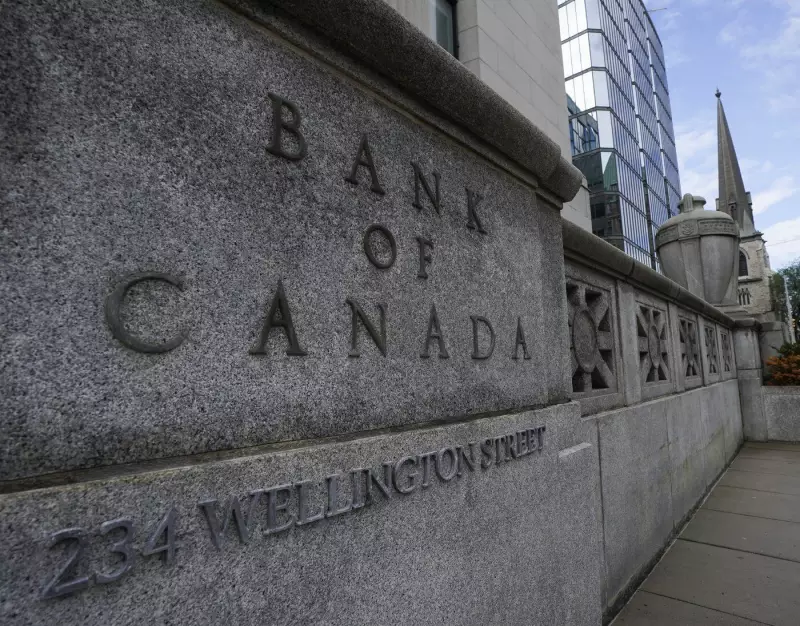
Bank of Canada Maintains Key Interest Rate at 2.25% Amid Economic Uncertainty
In a widely anticipated move, the Bank of Canada has opted to hold its benchmark interest rate steady at 2.25 percent. This decision, announced on Wednesday, reflects the central bank's ongoing assessment of a Canadian economy that continues to exhibit signs of softening. The announcement underscores a period of careful monitoring by policymakers as they navigate persistent inflationary pressures against a backdrop of slowing growth.
A Cautious Stance in a Softening Economic Landscape
The central bank's governing council concluded that maintaining the current policy rate is appropriate, given the mixed economic signals. Recent data suggests that while inflation remains above the bank's two percent target, economic momentum has weakened more than previously forecast. This creates a complex balancing act for officials who must weigh the risks of entrenched inflation against the potential for an economic downturn.
The decision to pause rate hikes follows a series of increases over the past two years aimed at cooling an overheated economy. Analysts note that this hold signals a shift toward a more data-dependent approach, with future moves likely contingent on incoming economic reports concerning employment, consumer spending, and business investment.

Implications for Consumers, Businesses, and the Housing Market
For Canadian households, the rate hold means a temporary reprieve from rising borrowing costs on variable-rate mortgages, lines of credit, and other loans. However, economists caution that rates are likely to remain elevated for the foreseeable future, continuing to strain household budgets already pressured by high living costs.
Business leaders are interpreting the decision as a sign that the central bank is attempting to avoid tipping the economy into a recession. The stable rate environment may provide some certainty for corporate planning and capital investment, though concerns about weak demand persist across several sectors.
The real estate market, which has been particularly sensitive to interest rate fluctuations, may experience a period of stabilization. However, affordability challenges are expected to remain a significant barrier for many prospective homebuyers, given that mortgage rates are still substantially higher than they were just a few years ago.
Looking Ahead: The Path for Monetary Policy
The Bank of Canada's statement indicated that the governing council remains prepared to raise the policy rate further if needed to return inflation to target. However, the emphasis has clearly shifted toward patience, with officials stating they will be looking for evidence that underlying inflation is on a sustained downward path.
Key factors that will influence future decisions include:
- Core inflation measures and their persistence
- Labor market conditions and wage growth
- Global economic developments and commodity prices
- Household spending and business sentiment surveys
Most market observers now expect the Bank of Canada to keep rates on hold for at least the next several months, with the possibility of rate cuts emerging later in the year should the economic slowdown deepen. The central bank's next interest rate announcement is scheduled for early March, which will provide further insight into policymakers' evolving assessment of economic conditions.






