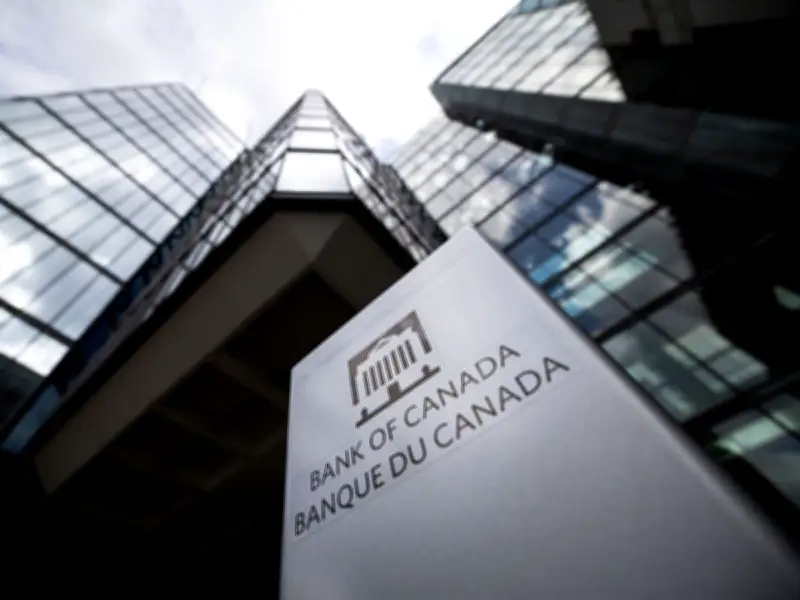
The Bank of Canada has decided to maintain its key interest rate at 2.25%, keeping borrowing costs unchanged amid a fragile economic outlook and persistent global uncertainties. The announcement was made on June 10, 2026, following the central bank's latest policy meeting.
Rate Decision Details
The Bank of Canada held its target for the overnight rate at 2.25%, with the Bank Rate at 2.5% and the deposit rate at 2.20%. This decision comes as the Canadian economy faces headwinds from geopolitical tensions, trade policy uncertainty, and elevated energy prices.
Global Economic Context
The conflict in the Middle East, now in its fourth month, continues to drive up energy prices and disrupt global supply chains, weighing on economic growth worldwide. In the United States, economic growth remains solid, supported by consumer spending and investment in artificial intelligence. However, the euro area is experiencing subdued growth due to higher energy costs, while China's economy is bolstered by strong exports.

Canadian financial conditions have loosened since the April Monetary Policy Report, with global equity markets buoyant and bond yields volatile. The Canadian dollar has weakened against the U.S. dollar and other major currencies.
Domestic Economic Performance
Canada's GDP edged down by 0.1% in the first quarter, weaker than expected. Consumer spending grew by 1.4%, but government spending unexpectedly declined. Housing activity also fell, and business investment remained weak. Exports declined while imports rose strongly as inventories were rebuilt.
Employment increased in May, but overall employment has changed little since the start of the year. The unemployment rate continues to fluctuate between 6.5% and 7%, with the latest reading at 6.6% in May.
Inflation Outlook
CPI inflation rose to 2.8% in April, driven by higher energy prices. However, core inflation measures have moved down to around 2%, and the share of CPI components growing above 3% is close to its historical average. Food price inflation moderated but remains high, while shelter inflation continued to slow.
With global oil prices still elevated—roughly $10 a barrel above the Bank's April assumptions—total inflation is expected to hover around 3% in the near term before gradually easing towards 2%.
Governing Council's Stance
Against this backdrop, the Governing Council decided to maintain the policy rate at 2.25%. Economic activity in Canada has been weak, and uncertainty about U.S. trade policy persists. The conflict in the Middle East is ongoing, keeping oil prices elevated.
The Bank is committed to maintaining Canadians' confidence in price stability through this period of global upheaval. As the outlook evolves, the Bank stands ready to respond as needed to ensure inflation does not become persistent.