

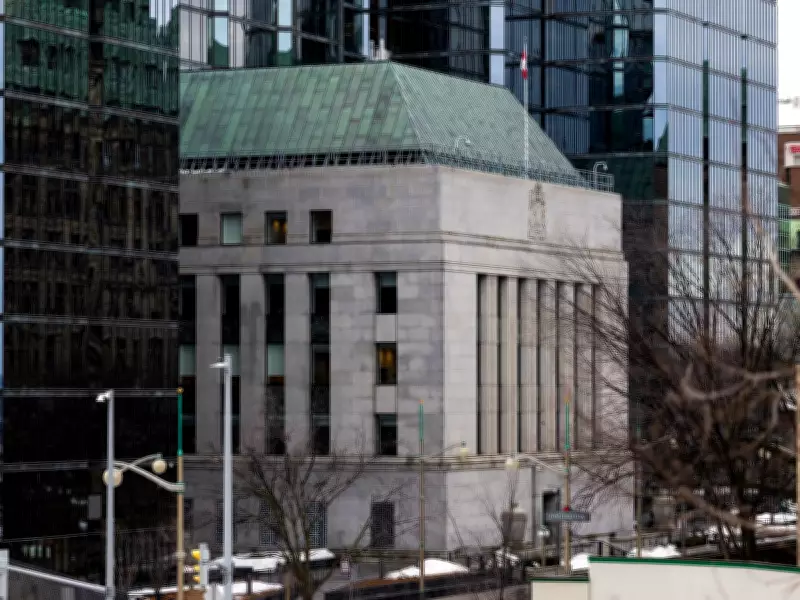
Bank of Canada Faces Mounting Pressure for Interest Rate Increase This Year
Financial markets are now fully anticipating an interest rate hike from the Bank of Canada in September, a significant shift from just days ago when investors projected such a move might not occur until year-end. This dramatic change in expectations comes as economists warn that rising oil prices could force the central bank's hand earlier than previously expected.
Inflation Expectations at Risk from Middle East Conflict
The recent military actions involving the United States and Israel against Iran have sidelined approximately one-fifth of global crude exports, creating substantial volatility in energy markets. According to Bradley Saunders, North America economist at Capital Economics Ltd., this development poses a particular threat to Canadian consumers' inflation expectations.
"This is always a risk during oil supply shocks, given consumers keep a close eye on prices at the pump," Saunders noted in a recent analysis. He emphasized that the Bank of Canada would seriously consider "bringing rate hikes forward into this year" should inflation expectations begin to rise significantly.

Gasoline and Food Prices Create Toxic Mix
The data reveals concerning trends in essential spending categories. The average price for a litre of regular gasoline in Canada jumped to $1.59 on March 12, up from $1.43 just ten days earlier on March 2, according to Kalibrate Technologies Ltd. This rapid increase at the pumps coincides with accelerating food inflation, which reached 7.8 percent in the latest consumer price index report, far exceeding the overall CPI increase of 2.3 percent.
Saunders highlighted the particular danger of this combination: "Food inflation coupled with rising oil prices is something of a toxic mix when it comes to inflation expectations, especially since gas and food account for roughly one-fifth of most households' spending."
Central Bank's Mandate and Diverging Views
The Bank of Canada operates under a clear mandate to adjust interest rate policy to maintain overall inflation as close as possible to its two percent target. Governor Tiff Macklem, during the last rate announcement on January 28, indicated that the current rate of 2.25 percent was appropriate for controlling inflation and helping the economy navigate international trade challenges, while leaving room for adjustment if risks increased.
However, not all economic experts agree on the appropriate course of action. The C.D. Howe Institute's Monetary Policy Council, which includes economists from Canada's six largest banks along with academics and financial experts, recommended on Thursday that the Bank of Canada maintain current rates through March 2027.
The MPC cited substantial uncertainty surrounding the Middle East conflict, its impact on oil prices, and the broader implications for the Canadian economy. "As monetary policy works with a lag, the question is not where oil prices are today, but where they will be later in the year," the council stated. "On that front, there is significant uncertainty."
Timing Dependent on Conflict Duration
Charles St-Arnaud, chief economist at Servus Credit Union, emphasized that the Bank of Canada's future decisions will largely depend on how long the Middle East conflict persists and its sustained impact on global energy markets. The central bank's governing council faces the challenging task of balancing immediate inflationary pressures against longer-term economic stability concerns.
With the next rate decision scheduled for March 18, policymakers must weigh these competing factors carefully. The dramatic shift in market expectations reflects growing concern that external shocks from geopolitical events could override domestic economic considerations, potentially forcing earlier monetary tightening than previously anticipated.






