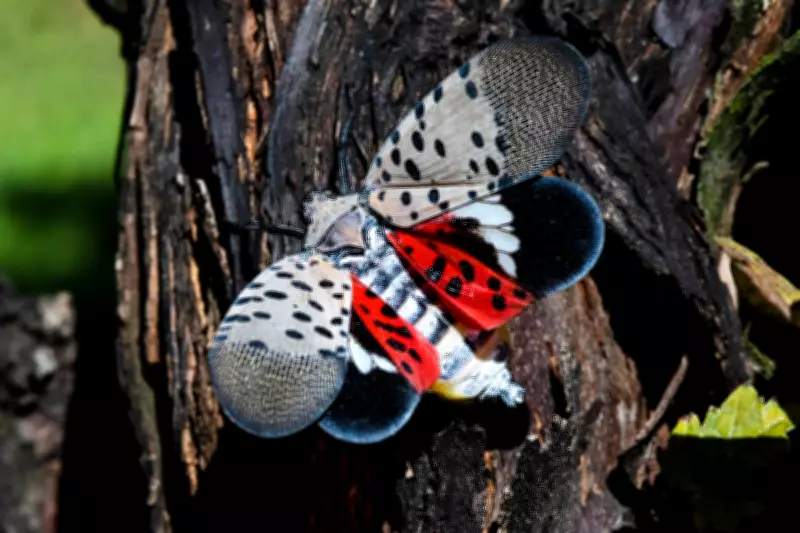
The spotted lanternfly, an invasive pest known for damaging crops and trees, has been recently discovered in Ontario. Experts are urging residents to report sightings and, if possible, squish the insects to prevent their spread.
What Is the Spotted Lanternfly?
The spotted lanternfly (Lycorma delicatula) is a planthopper native to China, India, and Vietnam. It was first detected in the United States in 2014 and has since spread to multiple states, causing significant damage to vineyards, orchards, and forests. The insect feeds on the sap of over 70 plant species, including grapevines, fruit trees, and hardwood trees.
Why Is It a Threat?
The spotted lanternfly excretes a sugary substance called honeydew, which promotes the growth of sooty mold, harming plants and reducing photosynthesis. This can lead to reduced crop yields and even plant death. In agricultural areas, the pest poses a serious threat to the grape and wine industry, as well as to fruit and ornamental trees.

How Did It Get to Ontario?
It is believed that the spotted lanternfly may have hitchhiked on vehicles, shipping containers, or outdoor furniture from infested areas in the United States. The first confirmed sighting in Ontario was reported in early May 2026.
What Should You Do If You See One?
Experts advise residents to take the following steps:
- Report sightings to the Canadian Food Inspection Agency (CFIA) or local authorities.
- Squish or remove the insects when possible, as they have no natural predators in Canada.
- Check vehicles and outdoor items for egg masses or insects before traveling.
Preventing the Spread
The CFIA is conducting surveys to determine the extent of the infestation. Residents can help by inspecting trees, plants, and outdoor equipment for signs of the pest. The spotted lanternfly is most active in late spring and early fall.
Long-Term Impact
If the spotted lanternfly becomes established in Ontario, it could have devastating effects on the province's agriculture and forestry sectors. Early detection and public cooperation are key to controlling its spread.