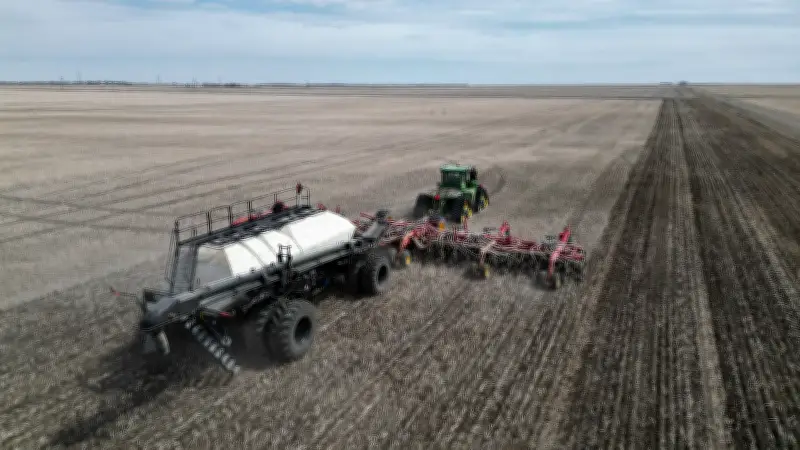
Seeding across Saskatchewan is nearly complete, with most regions finishing up despite earlier weather delays, according to the latest provincial crop report.
Seeding Progress by Region
The report, released June 25, 2026, indicates that 98% of crops have been seeded province-wide, up from 85% the previous week. The southeast leads at 99% complete, while the northwest trails at 95% due to excess moisture.
Farmers in the southwest reported rapid progress, with 97% of fields seeded. The east-central region reached 98%, and the west-central area hit 96%. Only isolated pockets remain unseeded, primarily in low-lying areas.

Weather and Moisture Conditions
Topsoil moisture is rated as adequate to surplus across most of the province. Subsoil moisture levels are also favorable, supporting early crop emergence. However, some areas in the northwest received excessive rainfall, causing localized flooding and delaying final seeding operations.
Crop emergence is generally good, with canola, wheat, and barley showing strong early growth. Producers are now shifting focus to in-crop herbicide applications and monitoring for pests.
Impact on Crop Outlook
According to the report, the near-complete seeding sets the stage for a potentially strong growing season. Early estimates suggest total planted acreage could match or exceed the five-year average, depending on final tallies.
“Producers have done an excellent job getting the crop in the ground despite challenging conditions in some areas,” said a spokesperson for the Saskatchewan Ministry of Agriculture. “Timely rains have supported good germination, and we are optimistic about the season ahead.”
The report also noted that 12% of fall rye and 8% of winter wheat are now in the heading stage, ahead of normal development.
Next Steps for Farmers
With seeding winding down, farmers are turning to weed control and nutrient management. The report advises monitoring for flea beetles in canola and grasshoppers in cereal crops, as warm weather increases pest activity.
The next crop report is expected in two weeks, providing updates on crop development and moisture conditions.