

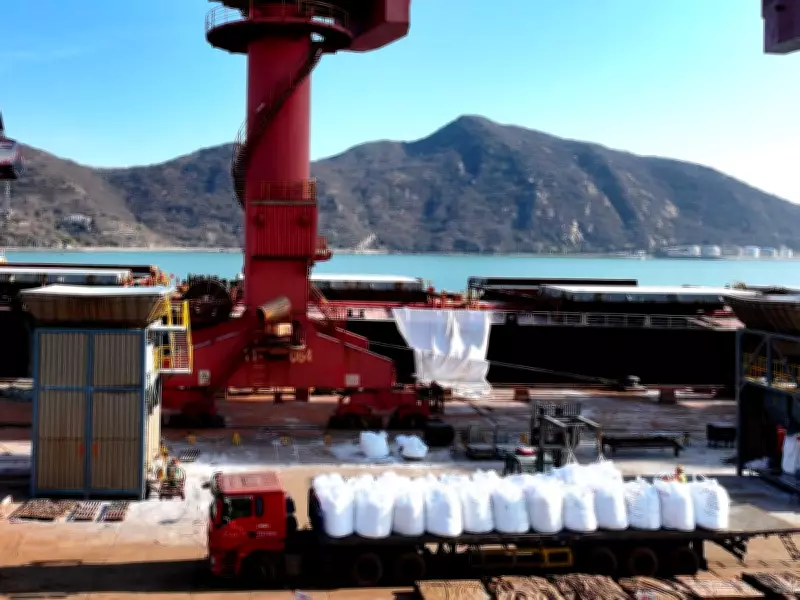
Global Fertilizer Crisis Intensifies as Nations Scramble to Secure Supplies
Governments across the world are engaged in a frantic race to secure critical fertilizer supplies ahead of the crucial spring planting season, as escalating conflict in the Middle East severely disrupts global commodity flows and amplifies fears of a widespread food crisis. The situation highlights the intricate connection between energy markets and food production systems, with fertilizers serving as the vital link that supports agricultural harvests worldwide.
Middle East Disruption Creates Global Supply Shock
The Middle East region represents a crucial supplier of both mineral reserves and natural gas required for fertilizer production, making it essential for global food staples including corn, wheat, and rice. With the strategic Strait of Hormuz effectively closed to shipping traffic due to ongoing military exchanges between Iran, the United States, and Israel targeting energy infrastructure, fertilizer shipments have ground to a complete halt.
This disruption has triggered immediate price surges for urea, the most widely utilized nitrogen fertilizer globally, while phosphate supplies face similar risks. Since a substantial portion of global fertilizer stock is concentrated in the Persian Gulf region, panic is spreading rapidly across major agricultural economies that depend on these imports.

Nations Implement Emergency Measures
Major fertilizer exporters including China and Russia have begun restricting some crop nutrient sales, while the United States is loosening shipping restrictions to facilitate domestic distribution. India, as the world's largest urea purchaser, is actively scrambling for alternative supply sources and considering emergency tender processes.
European nations are responding with financial support mechanisms, with Greece and France expanding assistance programs for farmers facing input shortages. In Africa, Ghana has implemented a free fertilizer distribution program to protect agricultural production. "Farmers should not bear the burden of any crisis," declared Indian Prime Minister Narendra Modi during a parliamentary address concerning the Middle East conflict, while announcing government efforts to bolster national fertilizer reserves.
Economic Implications and Policy Responses
The fertilizer price surge threatens to reverse recent progress in moderating food inflation, which had begun easing after years of consecutive shocks including the pandemic, the Ukraine conflict, and extreme weather events. Although typically excluded from core inflation measurements, agricultural price pressures continue to challenge central bankers globally.
Bank of England Governor Andrew Bailey recently warned of renewed inflationary pressures as policymakers maintained steady interest rates this month. Simultaneously, governments are implementing protective measures for farmers already struggling with weak crop prices, elevated input costs, and international trade restrictions including tariffs imposed by the Trump administration.
Intensifying Global Competition for Resources
The competition for limited fertilizer supplies is becoming increasingly fierce. Earlier this month, the Trump administration lifted sanctions on Venezuelan fertilizers specifically to "ease the impact on American farmers," according to White House spokesperson Anna Kelly. Colombia's state-owned Ecopetrol SA is pursuing access to the same stockpiles while considering a bid for Monómeros, a strategically important fertilizer production facility on its Caribbean coast.
Brazil is accelerating purchases from Morocco and Gulf countries while exploring a joint fertilizer and energy initiative with Bolivia, according to senior Brazilian officials. The country recently sanctioned legislation reducing taxes on chemical inputs required for fertilizer production. "Everyone is on the hunt," observed Randy Place, a senior grains analyst at The Hightower Report, capturing the global scramble for agricultural nutrients.

A More Perilous Moment Than Previous Crises
In significant respects, the current Middle East conflict represents an even more dangerous situation than Russia's 2022 invasion of Ukraine, which previously disrupted global supply chains. The current crisis involves a substantially larger share of nitrogen fertilizer trade, with the Middle East accounting for over one-third of global urea exports and nearly a quarter of ammonia shipments.
Additionally, approximately half of global sulfur trade, essential for phosphate fertilizer production, predominantly transits through the now-blockaded Strait of Hormuz. This concentration of critical agricultural inputs in a conflict zone creates unprecedented vulnerabilities for global food systems as nations prepare for planting seasons that will determine harvest outcomes for billions worldwide.





