

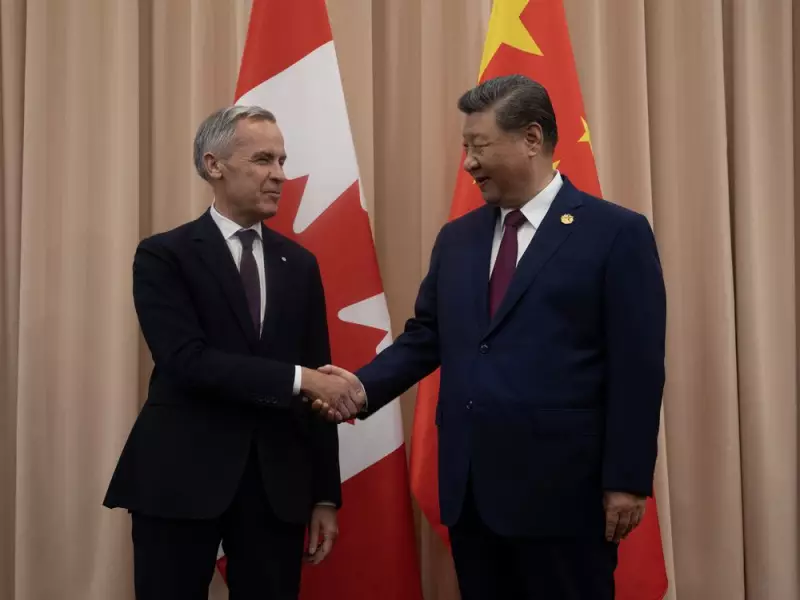
Canola and pulse crop producers across the Canadian Prairies are gripped by high anxiety this week, their livelihoods hanging in the balance as Prime Minister Mark Carney and Saskatchewan Premier Scott Moe hold pivotal meetings with Chinese President Xi Jinping in Beijing.
Farmers' Livelihoods on the Line
The diplomatic mission, focused on strengthening Canada-China ties, carries immense weight for agricultural communities. Dean Roberts, a Saskatchewan canola and pulse farmer and chair of Sask Oilseeds, voiced the prevailing sentiment. "I’m just anxious to hear what comes out of this, because this is so impactful to my farm, to my livelihood," Roberts said, noting many fellow growers share his apprehension.
The source of the anxiety is a series of punishing tariffs imposed by China. In March of last year, China effectively closed its doors to Canadian canola oil and meal, along with yellow peas, by imposing a 100 per cent tariff. The situation worsened in August when access for canola seed was severely restricted with a 76 per cent levy. These measures are widely viewed as retaliation for Canada's own imposition of stiff 100 per cent tariffs on Chinese electric vehicles.

The Search for Markets and Spring Planting Decisions
The trade barriers have forced a painful pivot. Canola and pulse marketers are scrambling to find new international customers, while farmers face critical decisions about what crops to plant this coming spring amidst profound market uncertainty. China is the number-two market for Canadian canola, after the United States, making a resolution to the tariff dispute critically important for the sector's viability.
In a statement on Monday, Premier Scott Moe emphasized the need for a strong relationship with China. "Canada and Saskatchewan need a strong relationship with China and these meetings support the process of recalibrating how we work together," Moe said. Roberts expressed gratitude for Moe's advocacy, stating, "Premier Moe has been a very strong advocate on this issue and for farmers all along."
A Door Opened, and a Surprising Inclusion
Some observers see a glimmer of hope in Moe's inclusion on the prime ministerial trip. Stuart Smyth, an economics professor at the University of Saskatchewan, suggested that Moe's solo trade mission to China in September 2025 may have laid crucial groundwork. "I think that Premier Moe’s trip to China last September opened the door a crack," Smyth said. "This door had previously been firmly nailed shut."
Smyth noted that Moe's presence alongside Carney is a surprise, speculating on the reason. "Carney isn’t one to share the glory, nor does he care about the fate of farmers in Western Canada," Smyth said. "My guess for why he’s been included is that the Chinese have told Ottawa that they won’t discuss trade unless Moe is present."
Further complicating the prime minister's position, Smyth suggested Carney faces domestic political pressures that limit his flexibility. The professor stated Carney cannot easily back down on the EV tariffs due to a deal with Ontario Premier Doug Ford meant to protect union jobs in vote-rich southern Ontario, noting there are "no Liberal votes to be gained by doing anything for farmers in the three prairie provinces."
As the high-stakes meetings conclude, farmers from Saskatchewan to Manitoba and Alberta await news that will directly shape their economic future, hoping for a breakthrough that restores access to a vital market for one of Canada's most important agricultural exports.






