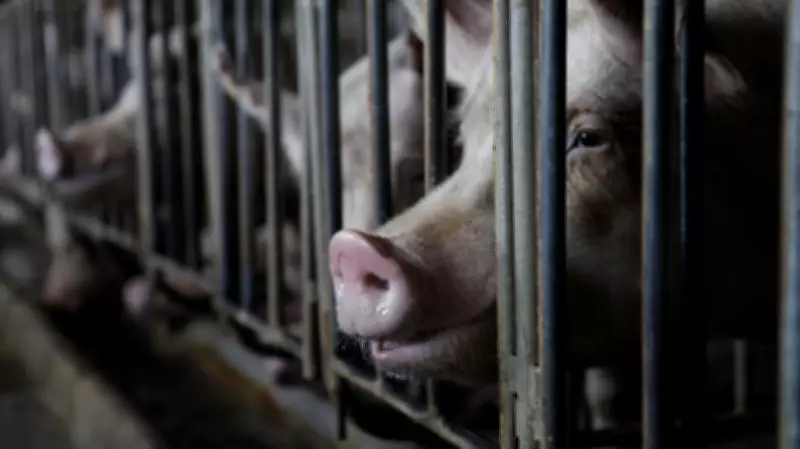
A GOP-backed provision within the 2026 farm bill, passed by the House on Thursday morning, threatens to nullify state laws designed to prevent pigs from being confined in spaces so small they cannot turn around. The Save Our Bacon Act, originally introduced as a standalone bill by Representative Ashley Hinson (R-Iowa), was later incorporated into the comprehensive federal farm bill that governs national food and agriculture policy. The act's name refers to its goal of overriding state bans on the sale of meat from animals kept in extreme confinement, particularly pigs housed in gestation or farrowing crates.
What Are Gestation Crates?
These metal enclosures, typically measuring 7 by 2 feet, are used by farms to prevent injury to pregnant or nursing pigs and their offspring. However, animal welfare advocates argue that such confinement causes pigs immense suffering and chronic stress. The debate has intensified as both Massachusetts and California have enacted laws prohibiting the sale of pork from farms using these crates, regardless of the state of origin. This creates an incentive for farmers nationwide to abandon crates to access those markets.
The Save Our Bacon Act's Implications
The SOB Act, supported by the National Pork Producers Council, would prohibit states from enacting laws concerning the sale of meat produced outside their borders. While California could still mandate standards for pork raised within its state, it could no longer regulate pork from other states. Proponents argue this protects farmers from costly adjustments dictated by other states' policies. However, the measure has drawn backlash from Democrats, MAHA Republicans, and animal welfare advocates across the political spectrum.

Representative Anna Paulina Luna (R-Fla.) attempted to introduce a bipartisan amendment to remove the SOB Act from the farm bill on Tuesday, but the House Rules Committee refused to allow a vote, ensuring the provision remained in the bill when it passed. Critics fear the broad language could also undermine hundreds of other state-level agriculture laws, not just those related to pigs.
The House version of the farm bill is not final. The Senate must pass its own version, and the two will be reconciled. The debate underscores ongoing tensions between state rights, animal welfare, and agricultural industry interests.