

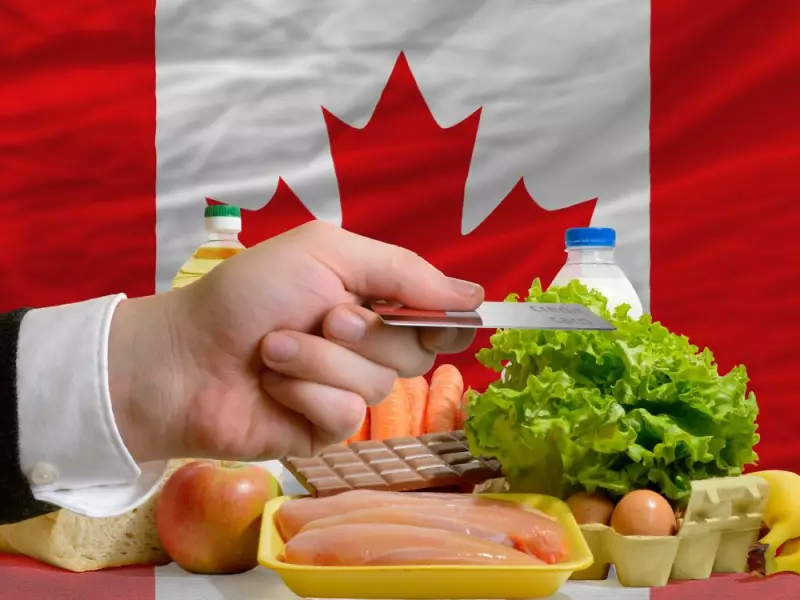
Canadian families are set to face a significant financial strain at the grocery store next year, with a new national report forecasting an average increase of nearly $1,000 in annual food costs.
Stark Forecast for 2026 Grocery Bills
According to the 16th annual Canada Food Price Report, released by the Agri-Foods Analytics Lab at Dalhousie University, overall food prices are projected to climb by between four and six per cent over the course of 2026. This continues a troubling trend, as food prices currently sit at 27% higher than they were just five years ago.
The report estimates that the average family of four will spend approximately $17,571.79 on food in 2026. This represents a staggering increase of $996.63 compared to last year's expenditures.

Meat Prices Lead the Surge, Some Produce Stable
The price of meat has been a primary driver of inflation, increasing by 7.2% over 2025. Beef prices, in particular, saw a dramatic spike, rising 19% in the first quarter of 2025 alone. Although they have since stabilized, beef remains 23% higher than the national average.
Dr. Stuart Smyth from the University of Saskatchewan attributes the beef crisis to nearly a decade of drought conditions in Canadian cattle pastures. This has shrunk the national beef herd to levels not seen since the late 1980s. New import agreements with Mexico and Australia are expected to provide some relief, but Smyth warns that unstable conditions will likely persist until at least 2027.
In a surprising contrast, the report's lead author, Dr. Sylvain Charlebois, noted that fruit and vegetable prices actually fell by 0.9% in 2025, defying earlier forecasts of a three-to-five per cent increase. Charlebois credited a stable Canadian dollar for helping importers maintain buying power.
Regional Impacts and Ongoing Food Insecurity
The financial pain will not be felt equally across the country. The report indicates that Alberta, Ontario, Quebec, Nova Scotia, and New Brunswick are all expected to experience food price increases that exceed the national average in the coming year.
This persistent inflation exacerbates a dire national problem: roughly one quarter of all Canadian households are currently considered food insecure. The relentless climb in grocery costs pushes basic nutrition further out of reach for millions.
Trade Policies and Potential Solutions
Ongoing trade tensions between Canada and the United States add a layer of uncertainty to future price predictions. While tariffs from March to September 2025 caused concern, Charlebois noted that both administrations now seem to recognize that "food is different." He pointed to former President Donald Trump's recent decision to end sweeping tariffs on key food imports like coffee, bananas, beef, and tomatoes as a positive step.
Charlebois argues that breaking down interprovincial trade barriers is a critical step toward improving affordability. He specifically mentioned the need to address Canada's supply management system for dairy and poultry. Eliminating these barriers could save Canadian families between $300 and $500 annually, according to the report's analysis.
The Canada Food Price Report is a collaborative study involving researchers from Dalhousie University, Saint Mary’s University, the University of Prince Edward Island, Cape Breton University, the University of Guelph, the University of Alberta, Université Laval, and the University of Saskatchewan.






