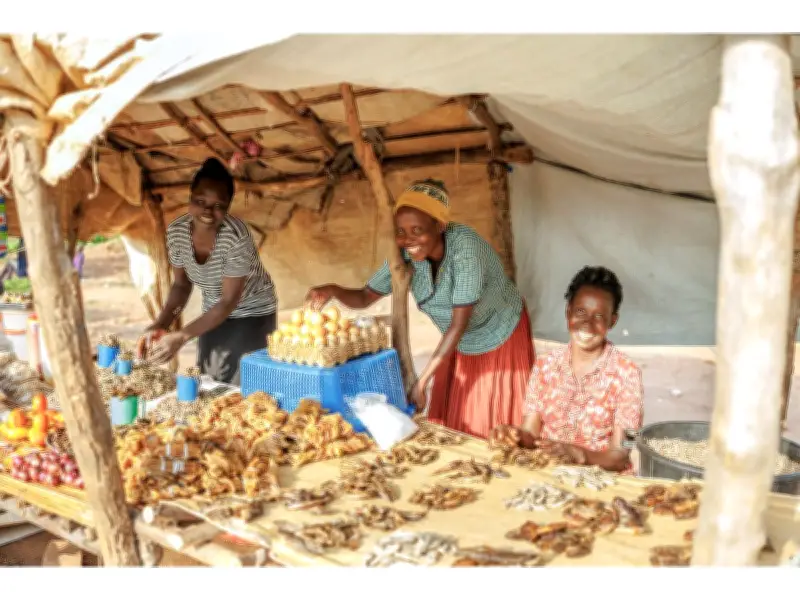
New studies reveal that the DREAMS program, which combines entrepreneurship support with market access, significantly reduces extreme poverty among refugees and host communities in East Africa. The program, implemented by Village Enterprise and Mercy Corps, has shown meaningful economic gains within a year in some of the world's most challenging refugee settings.
Key Findings from Randomized Controlled Trials
Two randomized controlled trials (RCTs) conducted by independent evaluator IDinsight found that participating households experienced substantial improvements. Compared to a control group, DREAMS participants increased monthly household consumption by 17% in Uganda and 9% in Ethiopia. Savings surged by over 90% in both countries, strengthening financial buffers and resilience to economic and climate shocks. Household assets grew by 20–24%, as participants acquired livestock, built homes, and invested in tools.
Program Reach and Impact
The DREAMS program reached more than 22,000 households across some of the largest refugee settlements globally, including Rhino Camp and Bidi Bidi in Uganda's West Nile region and three refugee settlements in Dollo Ado, Ethiopia. The program combines Village Enterprise's 12-month poverty graduation model—which equips ultra-poor households with skills, financial capital, and mentoring to start businesses—with market systems development (MSD) delivered by Mercy Corps. MSD fosters connections with local private sector actors to strengthen markets.

Cost-Effective Solution Amid Aid Cuts
At a time of unprecedented cuts to humanitarian aid, the findings highlight a highly cost-effective, scalable model that helps refugees and host communities move beyond aid dependence, create sustainable livelihoods, and provide for their families. The IKEA Foundation has committed $7.4 million to fund the next stage of DREAMS in Ethiopia, while the Conrad N. Hilton Foundation has granted $3.5 million for the next stage in Uganda.
Personal Stories of Transformation
Participants reported meaningful changes, such as buying more nutrient-rich foods like beef, fish, and milk, and covering school costs for their children. Viola, a refugee from South Sudan who now owns a hair salon in Bidi Bidi, said: "I arrived in Uganda with nothing. I didn't know that I could change like this. I think of the day I fled my home and how far I've come, and I'm amazed." Nurina, a refugee from Somalia living in Ethiopia with a disability, added: "Because of my disability, I used to feel isolated. But now they see that I can earn a living, save money, and provide for my children. This program was a turning point for my entire family."