Ford Motor Co. and Unifor on Monday will begin what could be the most consequential round of bargaining with the Detroit Three automakers.
Three years ago, the union representing nearly 19,000 Canadian auto workers secured historic wage gains. This time around, it will be attempting to protect the future of Canadian manufacturing amid United States tariffs, the ongoing review of the Canada-U.S.-Mexico Agreement (CUSMA) and pressure on automakers to move production south of the border.
Challenging landscape for bargaining
“The landscape is a very challenging one for the union to be collective bargaining,” said Charlotte Yates, president of the Automotive Policy Research Centre and former president of the University of Guelph. “You’ve got headwinds from the United States with tariffs, with opposition from the president of the United States, opposition to CUSMA.”

Jim Stanford, economist and director of the Centre for Future Work, said it’s like having a three-sided bargaining table this time around.
“The company on one side, the union on the second side and Donald Trump on the third side,” he said. “He is very much the elephant in the room in these talks.”
Idle plants and job losses
Adding to the pressure are two Ontario assembly plants sitting idle: General Motors Co.’s CAMI Assembly plant in Ingersoll, Ont., and Stellantis NV’s assembly plant in Brampton, Ont. Nearly 6,500 jobs have been lost across Canada’s auto manufacturing sector since last February, according to Unifor.
Ford was selected as Unifor’s lead bargaining target because of the automaker’s continued commitment to Canadian operations.
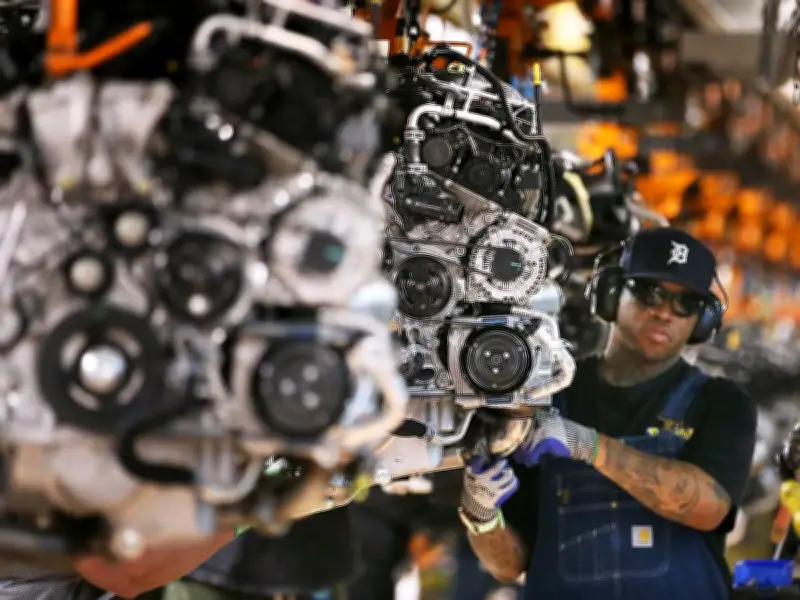
“Ford has a couple of big Canadian launches coming up,” Stanford said, pointing to new Super Duty pickup production in Oakville, Ont., and the launch of a new engine program at Essex Engine Plant.
Pattern bargaining and job security
Under Unifor’s pattern bargaining system, an agreement reached with Ford would then establish a framework for subsequent talks with GM and Stellantis.
“Unifor picks a company where they think they can get the best deal, but that deal has to be extended to the rest of the industry,” Stanford said.
While wages and benefits remain important, analysts expect job security and future product commitments to dominate the talks.
“They’re also going to be trying to get some commitment to their footprint in Canada to make sure that they protect jobs,” Yates said. “The question will be what happens when they start bargaining with Stellantis and when you’ve got two idle plants and you’ve got hundreds of workers on layoff.”
Stanford expects Unifor to seek commitments from Stellantis and GM tied to their currently idle facilities and laid-off workers.
Tariffs loom over negotiations
U.S. tariffs are also expected to loom over negotiations. A 25 per cent tariff on vehicles assembled outside the U.S. remains in place, while CUSMA-compliant auto parts currently remain exempt.
“The whole trade environment is so unpredictable because of the president,” Stanford added.