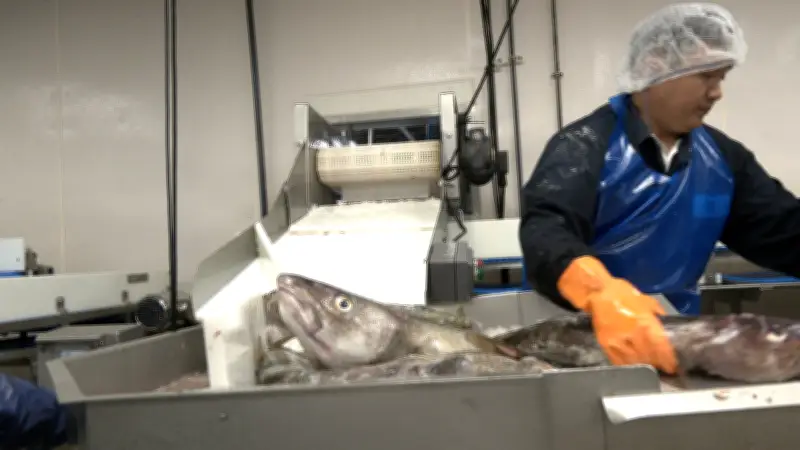
Staff at Icewater Seafoods in Arnold’s Cove, Newfoundland, are busy cutting, cleaning, and carving imported cod — raw fish frozen at sea — as demand for Canadian-processed cod surges after decades of a commercial fishing ban.
Market Revival
The commercial cod fishery was banned in 1992 to allow stocks to recover, but processing plants have adapted by importing cod from other countries. Now, with global demand rising, these plants are experiencing a renaissance. Icewater Seafoods has increased its workforce and production capacity to meet orders from North America and Europe.
According to company officials, the plant now processes over 10,000 tonnes of imported cod annually, a 25% increase from five years ago. 'We're seeing a strong appetite for sustainably sourced cod, and our facility is running at near capacity,' said a spokesperson.

Economic Impact
The surge has created jobs in rural Newfoundland, where unemployment has historically been high. Icewater Seafoods employs more than 200 people, many of whom were former fishermen. 'It's good to see the plant busy again,' said a local worker. 'It means we can stay in our communities and support our families.'
The Canadian government has supported the industry through grants for modernization and sustainability certifications. However, the ban on domestic cod fishing remains in place, with no timeline for its lifting.
Global Demand Drivers
Demand for cod has grown due to its popularity in fast-casual dining and health-conscious markets. Canadian processors emphasize traceability and quality, which command premium prices. 'Our cod is fully traceable from ocean to plate, which gives customers confidence,' noted the spokesperson.
Industry analysts predict continued growth as consumers seek sustainable seafood options. The challenge remains balancing import reliance with hopes for a future domestic fishery.