

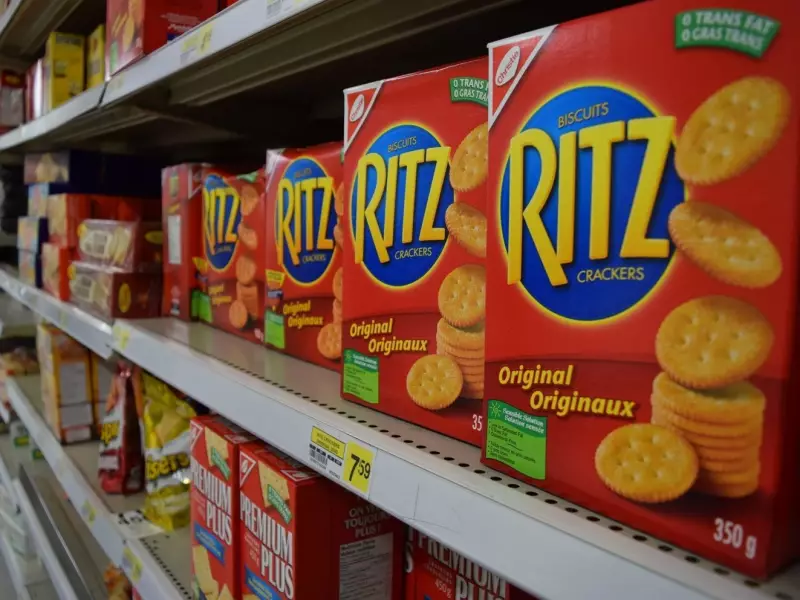
Food prices in Canada are accelerating at a concerning pace, placing additional strain on household budgets already stretched thin. According to the latest data, food inflation rose to 4.2% in November, up from 3.4% the previous month. More alarmingly, the cost of food purchased in stores jumped to 4.7%, marking the highest level seen since December 2023.
Canada's Food Inflation Gap Leads the G7
A comparison with other advanced economies highlights Canada's particular vulnerability. The critical metric is the gap between food inflation and overall inflation, which shows whether grocery prices are rising faster than other costs. Canada's gap stands at a significant plus-2%, placing it near the top of the G7 nations. Only Japan shows a larger divergence.
This contrasts sharply with other major economies. The United Kingdom has a gap of plus-1.3%, Italy plus-1.1%, and France plus-0.5%. In the United States, the gap is negligible at plus-0.1%, while in Germany, food inflation is actually running below overall inflation at minus-0.5%.

Moving Beyond the 'Greedflation' Narrative
Public discourse has often pointed fingers at grocery retailers, but a notable shift has occurred in Ottawa. As noted by Dr. Sylvain Charlebois, director of the Agri-Food Analytics Lab at Dalhousie University, not a single federal cabinet minister has publicly blamed grocers for food inflation in nearly two years. This rhetoric is now largely confined to opposition parties like the NDP and the Greens.
This change suggests a growing recognition that the problem is complex. Data does not support the 'greedflation' theory, as gross profit margins for major grocery chains have remained stable. If corporate profiteering were the primary driver, these margins would be expanding. Instead, experts argue consumers are experiencing a pass-through of rising costs within a system under significant structural strain.
The Root Causes: A System Under Stress
The persistent rise in food costs points to deep-seated issues within Canada's food supply chain. The problems are multifaceted and policy-driven:
- Elevated Input Costs: Prices for energy, fertilizer, and labour remain high.
- Regulatory Friction: Complexity adds delays and costs at multiple points from farm to shelf.
- Logistics Challenges: High transportation costs in a vast country with limited infrastructure redundancy.
- The 'Missing Middle': A lack of scalable mid-tier food processors and distributors, which helps stabilize prices in other advanced economies.
- Trade and Production Limits: Constraints that reduce market flexibility and competition.
The current inflation is broad-based, affecting nearly all categories. All three major meat types—beef, pork, and chicken—are rising simultaneously, a rare and troubling pattern. Prices for coffee, pantry staples, and vegetables continue to climb, indicating a systemic issue rather than a temporary shock.
The path to lower prices, according to analysts, requires confronting these systemic flaws. Solutions include reducing regulatory drag, improving transportation and logistics capacity, encouraging investment in domestic food manufacturing, and modernizing competition policy to allow firms to scale effectively.
As Dr. Charlebois concludes, food inflation is not a communications problem to be solved by political slogans. It is a systems problem. Until Canada addresses the underlying structural stresses, food prices will remain uncomfortably high for consumers across the nation.






