

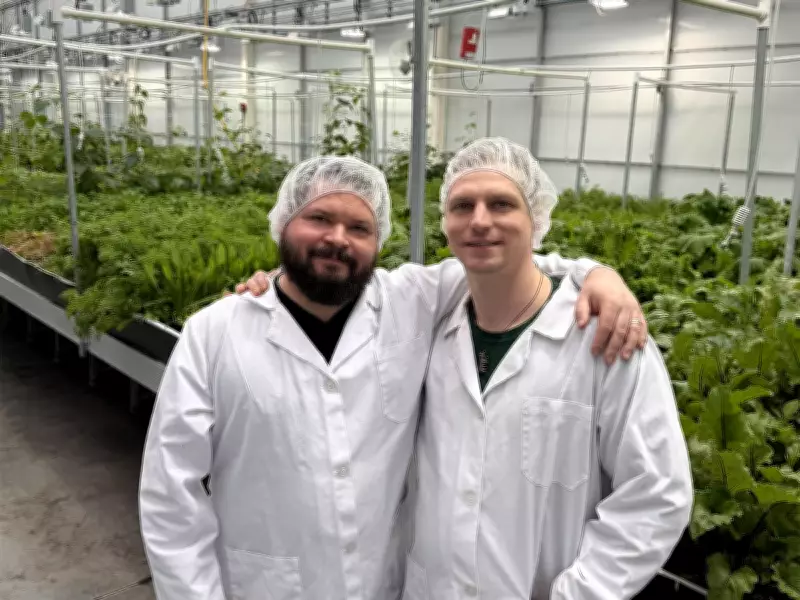
Southern Alberta Business Transforms Former Cannabis Facility into Mushroom Farm
In a remarkable example of agricultural innovation, a southern Alberta enterprise has successfully converted a former cannabis growing operation into a productive gourmet mushroom and produce farm. Hypha Farms Ltd. has breathed new life into a Claresholm facility that had stood vacant for approximately two years following the bankruptcy of Custom Cannabis Inc. in August 2023.
From Cannabis to Culinary Mushrooms
The transition represents a significant shift in agricultural focus for the region. Devon Davidson, CEO of Hypha Farms, explained that the decision to enter mushroom cultivation began as what he described as "a really cool sort of side hustle type of project" that unexpectedly gained substantial momentum and market traction. Davidson, who previously worked as a cannabis grower and processor in Calgary, found the cannabis industry to be excessively regulated, heavily taxed, and intensely competitive.
Hypha Farms took possession of the Claresholm facility in August and has since activated two of the five available greenhouses, with plans to bring a third greenhouse into operation in early April. The company is currently undertaking a retrofit to establish a specialized laboratory tailored to mushroom cultivation requirements, a project expected to require approximately one more month for completion. A temporary laboratory is currently supporting operations during this transition period.

Adapting Existing Infrastructure
The conversion process has proven surprisingly efficient, according to Davidson. The greenhouses, originally constructed with substantial investment for cannabis production, required minimal modification to accommodate mushroom farming. The primary adjustments involved installing additional cooling and humidification systems to create the optimal environment for mushroom cultivation.
"It was a fairly easy choice when selecting this building, because we would have had to put a lab together at any spot," Davidson noted, highlighting the practical advantages of repurposing existing agricultural infrastructure rather than building from scratch.
Expanding Product Range and Market Reach
Hypha Farms specializes in cultivating a diverse array of gourmet mushrooms through indoor vertical farming techniques. Their product lineup includes blue oyster, chestnut, and lion's mane varieties, all grown in controlled environmental conditions. Beyond mushrooms, the operation also produces various vegetables including carrots, peppers, onions, tomatoes, strawberries, beans, lettuce, and snap peas.
The business has experienced such significant growth that it recently opened a retail store in late January, which Davidson indicated might require expansion due to strong customer demand. "Everybody in town is happy to be able to get fresh produce locally," he observed, emphasizing the community's positive response to having access to locally grown food.
Market Trends and Future Prospects
Davidson identified a substantial increase in Canadian consumer interest in gourmet mushrooms, attributing this trend to growing awareness of their nutritional benefits and versatility as meat alternatives. "People are learning more and more about the nutritional benefits of mushrooms, what you can do in regards to meat replacements with mushrooms," he explained.
The company's origins trace back to 2021 when Davidson and his brother Wayne began cultivating mushrooms in grow tents within a garage. Their operation subsequently relocated to Mossleigh in Vulcan County for approximately two years before outgrowing that space and requiring the larger Claresholm facility to accommodate increasing customer demand.
Looking forward, Davidson expressed optimism about Hypha Farms' expansion potential, with aspirations to supply more grocery chains and restaurants as consumer interest in gourmet mushrooms continues to grow across Canada. The successful repurposing of the former cannabis facility demonstrates how agricultural spaces can be adapted to meet evolving market demands while contributing to local food security and sustainable farming practices.






