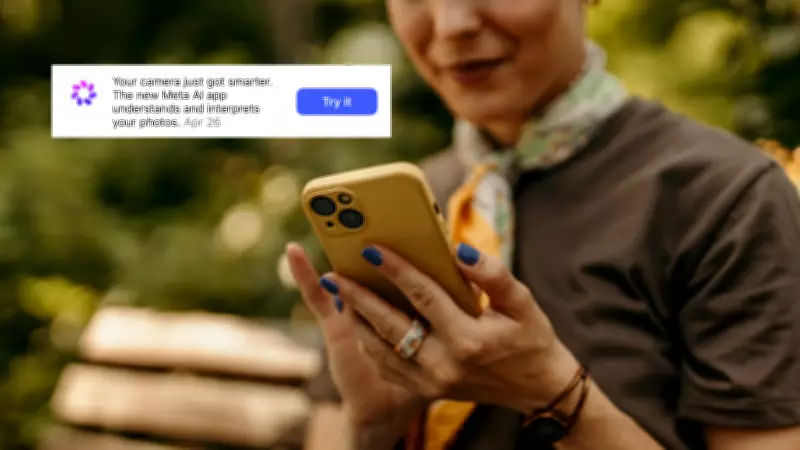
Meta has launched an AI-powered photo application that allows users to create and edit images using artificial intelligence. The tool, which began appearing on Facebook last year, is now prompting notifications that read: "Your camera just got smarter. The new Meta AI app understands and interprets your photos." While some users are excited, others are concerned about privacy implications.
What the Meta AI Photo App Does
The app enables users to generate AI images from text prompts, animate existing photos, or change backgrounds on Facebook and Instagram. According to JP Castellanos, director of threat intelligence at Binary Defense, this is Meta's attempt to catch up with Google and Apple's AI photo features. However, he warns that the tool goes beyond typical filters: "It's not just a normal Instagram filter ... it's going to be AI. Your data, your photos and your videos are basically taken from your camera roll, and then they're going to be uploaded into Meta servers so Meta AI can start analyzing them and making suggestions."
Privacy Concerns and Data Handling
Castellanos notes that Meta AI servers are separate from standard Meta servers, meaning your data could reside in two locations if you opt in. The feature is not used for ad targeting or AI model improvement unless you explicitly share that information. Sean Gorman, CEO of Zephr.xyz, advises users to review terms of service: "You want to look at the terms of service and understand how they're using the data." While Gorman believes this specific feature doesn't pose additional privacy threats, he acknowledges that the trade-offs—targeted ads and habit tracking—are accelerating with AI.

Security Risks and Recommendations
Experts urge caution because camera rolls often contain sensitive material beyond selfies, such as private conversations, children's photos, receipts, or medical documents. Castellanos recommends turning off the AI photo feature and limiting Instagram and Facebook to selected photo access only. "Not to say that Facebook probably doesn't already have your data, but now you're just giving them more information," he says.
Balancing Benefits and Risks
Gorman downplays the privacy impact for existing users, noting that the feature doesn't reframe the broader social media debate. "It's fascinating technology, and there's some cool stuff, but it just is another signpost of where these systems are going," he says. Ultimately, the decision to use Meta's AI photo app depends on your comfort level with sharing data. If you value personalization, you may enjoy the feature; if you prioritize privacy, opting out is advisable.