Edmonton AI Expert: Human Skills Will Triumph Over Automation in Future Job Market
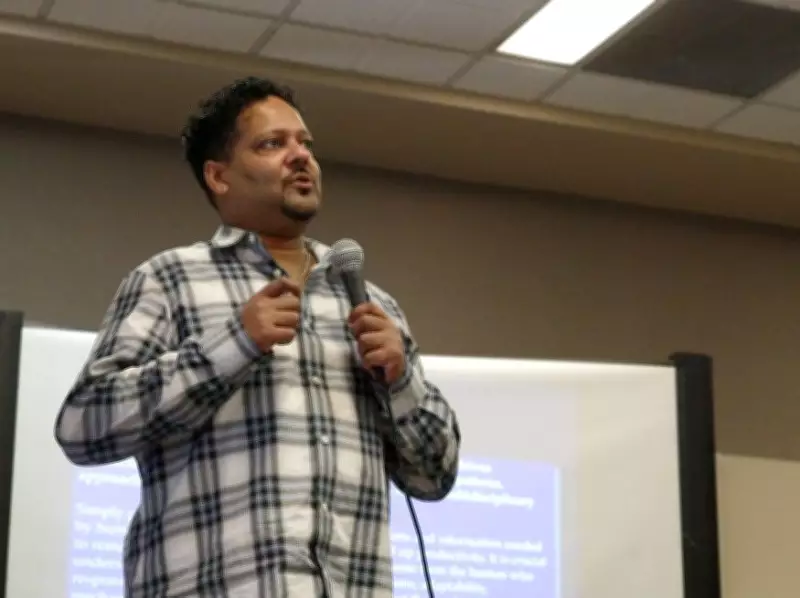
While artificial intelligence may be coming for many jobs, human interpersonal skills will ultimately win out in the evolving workplace, according to Edmonton AI analyst Kristian Bainey. The MacEwan University professor and NAIT instructor emphasizes that as AI handles more technical tasks, workers will have more time to focus on communication and relationship-building.
"You have more time to communicate, therefore your interpersonal skills will be a lot more focused on than hard skills," Bainey explained during a recent presentation to the Canadian Club of Edmonton. "This country has been quite slow to take up the technology compared to many other countries, despite the likelihood of AI affecting most jobs."
Practical Applications Over Theoretical Knowledge
Bainey brings practical expertise to the conversation about workplace automation, with deep knowledge of how AI operates in real-life applications rather than just academic theory. As an expert in both project management and artificial intelligence, he understands how these technologies integrate with existing business processes.

The Edmonton-based author recently shared his insights on how AI will transform both the workplace and education systems, offering specific guidance for students and current workers navigating these changes.
Preparing Students for an AI-Integrated Future
For students, Bainey emphasizes the importance of understanding academic integrity in relation to AI tools. "We need to have our students be aware of academic integrity dealing with AI, because AI is not going anywhere," he stated. "And it's really for the next generation."
Current workers, however, need to take more proactive steps according to Bainey. He recommends pursuing certifications from credible institutions, attending conferences, and participating in webinars - many of which are available for free.
"It's really just upgrading your skills within the role of AI because your role itself will change," Bainey explained. "If you want to stick out and be on the top, they will be looking for people that can lead and people that have good knowledge in AI within their industry."
Strategic Implementation of AI Technology
Bainey identifies specific areas where AI implementation makes the most sense:
- Data-driven decision making: Analyzing large datasets to predict forecasts and trends
- Risk management: Utilizing predefined data for prescriptive and predictive analysis
- Healthcare: Currently the number one application area for AI technology
- Education: An area where AI is poised to explode, particularly in brain-computer interface (BCI) technologies
However, Bainey cautions against implementing AI without proper understanding. "It should not be included, right now, in any industry, if you are not familiar of how it works and how it can benefit you," he warned. "If you don't know the subject that you're working on, and you do not know how AI can actually benefit you, implementing AI can be extremely dangerous."
The Competitive Edge in an Automated World
For job seekers, Bainey suggests that understanding AI tools and their benefits provides a significant advantage. "Learn those tools, understand the benefits, and I guarantee you will stick out during your job interview or even on your resume," he advised.
As workplaces continue to evolve with increasing automation, Bainey's message remains clear: while technical skills related to AI are valuable, the human capacity for communication, leadership, and interpersonal connection will become increasingly important differentiators in the job market of tomorrow.