Zverev Raises Concerns Over Alcaraz's Medical Break in Epic Australian Open Clash
In a dramatic and physically demanding Australian Open semifinal that stretched to five intense sets, German tennis star Alexander Zverev has publicly questioned the timing and nature of a medical timeout taken by his opponent, Spain's Carlos Alcaraz. The match, held on Friday, January 30, 2026, at Melbourne Park, ultimately saw Alcaraz triumph and advance to the championship final, but not without sparking controversy regarding the strategic use of medical interventions during critical moments.
A Semifinal Defined by Endurance and Controversy
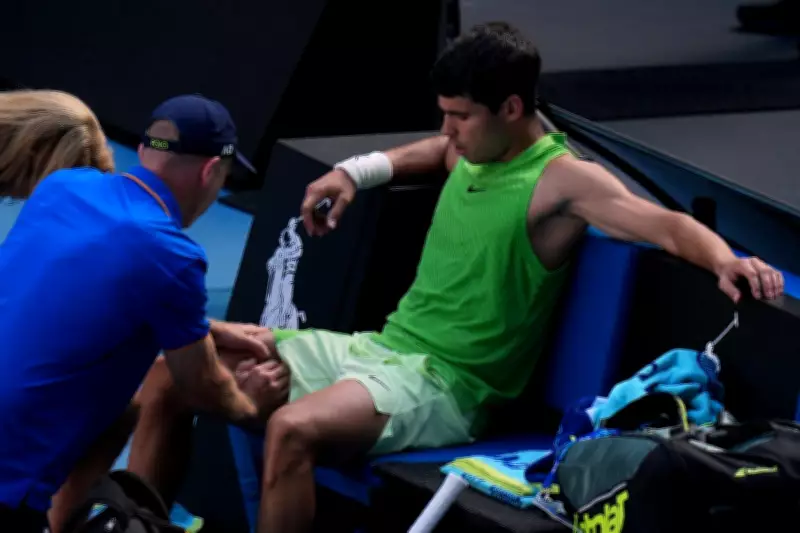
The encounter between the two top-ranked players was a showcase of elite athleticism and mental fortitude, with both competitors pushing their physical limits on the hard courts of Melbourne. During a pivotal juncture in the match, Alcaraz requested and received a medical timeout, receiving treatment that allowed him to continue. This interruption occurred amidst a fiercely contested battle, leading Zverev to express skepticism in his post-match comments.
Zverev pointedly addressed the situation, suggesting that such timeouts can disrupt an opponent's rhythm and momentum, especially in high-stakes Grand Slam matches. While he stopped short of making direct accusations of gamesmanship, his remarks highlighted an ongoing debate within professional tennis about the rules governing medical assessments and their potential impact on match flow and fairness.

The Broader Context of Medical Timeouts in Tennis
Medical timeouts are a standard provision in tennis, designed to ensure player health and safety. However, their application has long been a topic of discussion among players, coaches, and fans. Critics argue that they can be used tactically to break an opponent's concentration or to provide much-needed rest during exhausting rallies.
This incident at the Australian Open brings renewed attention to the protocols enforced by tournament officials and the ATP. The rules stipulate that a player may request a medical timeout for a legitimate injury or medical condition, with a trainer evaluating the need. The ambiguity often lies in determining the severity and immediacy of the issue, a subjective assessment that can lead to disputes like the one emerging from this semifinal.
Alcaraz's Path to the Final Amid Scrutiny
Despite the controversy, Carlos Alcaraz's performance was undeniably remarkable. Overcoming a determined Zverev in a five-set thriller demonstrates his resilience and skill at the highest level of the sport. His victory sets up a highly anticipated final, where he will aim to capture another Grand Slam title.
The discussion surrounding the medical timeout, however, adds a layer of narrative to his achievement. It raises questions about the psychological and physical strategies employed in modern tennis, where matches are as much a test of endurance as they are of technical prowess.
Implications for the Sport and Future Regulations
This event may prompt further examination of medical timeout regulations by tennis governing bodies. Potential considerations could include:
- More stringent guidelines for what constitutes a valid medical issue during a match.
- Limitations on the timing of such timeouts to prevent strategic misuse.
- Enhanced transparency in the assessment process to maintain integrity.
As the tennis community reflects on this Australian Open semifinal, the balance between player welfare and competitive fairness remains a delicate and evolving conversation. Zverev's comments ensure that this topic will continue to be debated in locker rooms and among analysts, potentially influencing future rule adjustments in the sport.