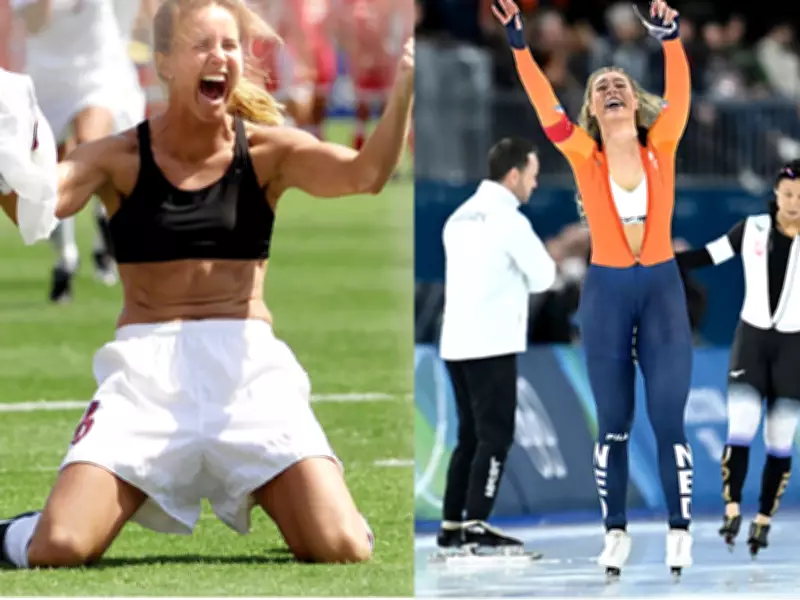
Nike Sports Bra Flash: From Chastain's 1999 Controversy to Leerdam's 2026 Payday
In 1999, Brandi Chastain dropped to her knees at the Rose Bowl, ripped off her jersey, and revealed a black Nike sports bra seen around the world. This iconic moment came after she scored the game-winning penalty kick in the Women's World Cup final against China, sealing victory for the U.S. team. Fast-forward to 2026, and Dutch speedskating star Jutta Leerdam unzipped her suit at the Milano-Cortina Winter Olympics, showcasing a white Nike sports bra after winning gold and breaking an Olympic record. While both athletes captured global attention with similar undergarment reveals, the eras and outcomes starkly contrast, highlighting a shift in women's sports and marketing dynamics.
Chastain's Raw and Controversial 1999 Moment
Chastain's spontaneous jersey rip was a genuine expression of relief, joy, and gratitude, as she described it to BBC News. The stadium, packed with 90,000 fans, fell eerily silent before her kick, with an additional 40 million viewers watching on TV, according to the Los Angeles Times. Despite never having taken a penalty kick with her left foot in a competitive match before, she trusted the plan and scored, leading to the U.S. victory. The photo exploded onto the covers of Newsweek, Sports Illustrated, and Time, becoming one of the most powerful images in women's sports history. However, not everyone cheered; critics called it inappropriate and accused her of diverting attention from the sport, sparking debates about decency in a time when male players had done similar acts without controversy.
Leerdam's Social Media-Driven 2026 Flash
In contrast, Leerdam's unzip at the 2026 Winter Olympics was perfectly framed for the social media age. The image went viral within minutes, and Nike blasted it to nearly 300 million followers on Instagram, as reported in earlier coverage. Marketing experts estimate that this moment could earn her over $1 million, according to Frederique de Laat of Branthlete, cited by the Daily Mail. Unlike Chastain's era, there was no moral panic this time—just pure marketing opportunity. Leerdam's gold medal win and record-breaking performance, combined with the viral flash, positioned her for significant brand payouts, reflecting how female athletes now command higher financial rewards for such moments.

Evolving Perceptions and Financial Impacts
The difference between these two events underscores a broader evolution in women's sports. Chrissy Franklin of Octagon told the Los Angeles Times that Chastain's moment was a turning point, opening the door for women to be unapologetic about their success. After 1999, Chastain signed endorsement deals with Nike, Gatorade, and Bud Light, but female athletes then weren't commanding seven-figure payouts for viral shots. In 2026, Leerdam's flash symbolizes a new era where such acts are leveraged for substantial financial gain without backlash. Both moments feature the same sports bra, but one sparked debate about appropriateness, while the other might spark a million-dollar payout, illustrating how times have changed in sports marketing and cultural acceptance.