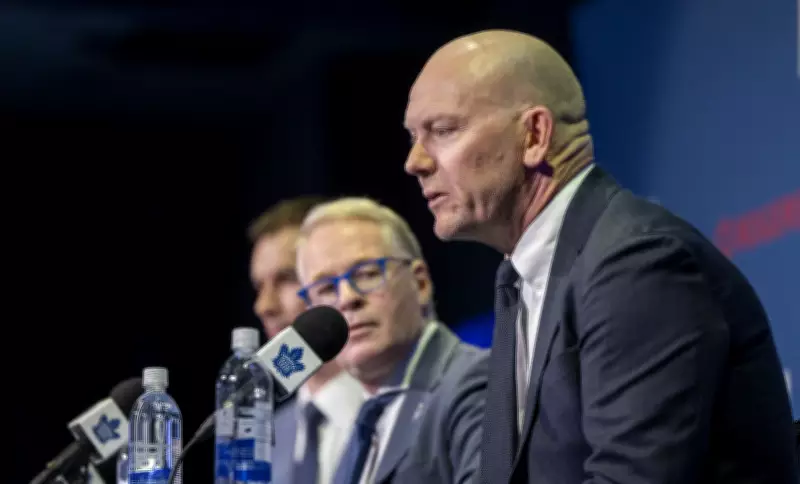
Keith Pelley interviewed 27 candidates for the general manager position of the Maple Leafs and ultimately selected John Chayka. How this decision was reached remains unclear, leaving many in the hockey world astonished. The reaction from other NHL markets is a mix of fascination, contradiction, and irrelevance. Chayka now holds the reins, and what matters is his performance as general manager and his unconventional partnership with Mats Sundin, the former captain who has unexpectedly returned.
There is substantial work ahead. The laughter from outside Toronto, though loud, is the kind of noise that GMs have long been advised to ignore. Chayka and Sundin must work together to fix the struggling Maple Leafs under circumstances that seem perplexing.
Unraveling the Hiring Process
Pelley stated that he chose Chayka after thorough due diligence. However, hockey commentator Ray Ferraro expressed shock, saying, "I couldn't be more stunned by this. This is where the Leafs have landed." The story becomes more complicated: Pelley claims to have hired Chayka, but Chayka reportedly told two hockey agents that he was hired by corporate head Edward Rogers, not Pelley. The truth likely lies somewhere in between, casting doubt on Pelley's tenure as CEO of Maple Leafs Sports and Entertainment.

On the same weekend, the NHL reminded the Leafs and Chayka about tampering rules after Chayka allegedly attempted to recruit staff for Toronto. The league did not formally accuse him but advised him to cease such activities.
Chayka and Sundin's Roles
Chayka is the general manager, effectively in charge of the Leafs. Sundin holds the title of senior executive director of hockey operations, but the specifics of his role were not clarified at Monday's press conference. Former NHL player Keith Yandle called the hiring "one of the worst moves in NHL history" on his podcast, reflecting widespread skepticism.
Immediate Challenges
Chayka's first priority is dealing with coach Craig Berube and captain Auston Matthews, who has two years left on his contract. The team is expected to retain Berube, not because of his performance, but due to the $6 million remaining on his contract. Chayka, known for his statistical analysis, faces a team that is statistically poor under Berube. Unless the goal is to tank next season, Berube should be let go to build for the future.
The Leafs' roster is not competitive for a championship. The defense is particularly old and slow, lacking young, quick puck movers that dominate the NHL. Chayka cannot fix the defense in one season without being a magician. There is no Quinn Hughes, Cale Makar, Lane Hutson, or Rasmus Dahlin on the Leafs' blue line. Even top defensemen like Moritz Seider and Zach Werenski missed the playoffs this year.
Matthews' Future
Matthews wants to remain captain as long as the Leafs are competitive. If they are not, the team may need to trade him, similar to the Quinn Hughes situation, hoping for a significant return. The Leafs previously drafted Morgan Rielly, William Nylander, Mitch Marner, and Matthews over five years, spending nine seasons together with modest success. In contrast, the Montreal Canadiens drafted and traded for Nick Suzuki, Cole Caufield, Kaiden Guhle, Juraj Slafkovsky, Ivan Demidov, Lane Hutson, and Jakub Dobes over six years, building a contender. Rebuilding takes time.
Under Pelley, the Leafs expect Chayka and Sundin to achieve contradictory goals: both compete and rebuild. This challenging dynamic marks the beginning of their managerial careers in Toronto.