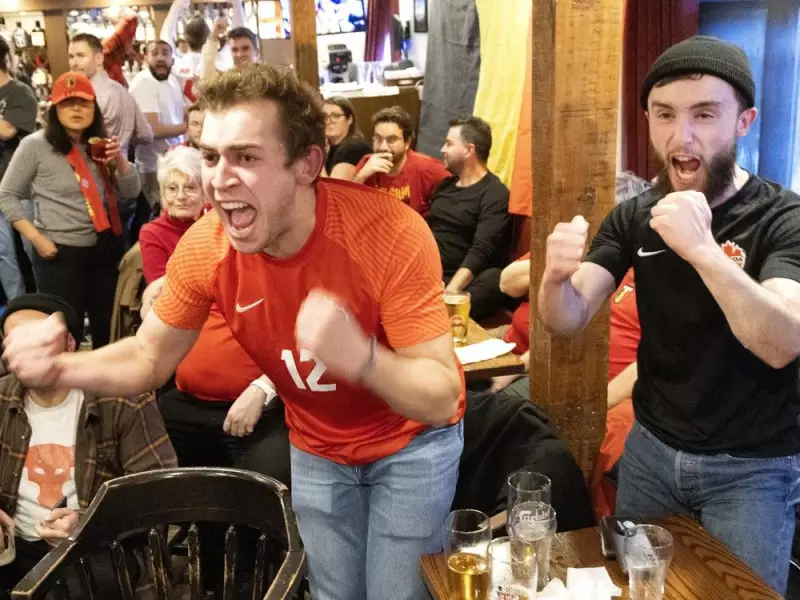
The roar of thousands of soccer fans spilling into the streets of Montreal will not be for a 2026 FIFA World Cup match. The city, once a contender to be the event's sole French-speaking host, stepped back from the global stage in 2021, a decision fueled by escalating costs that continues to resonate with its passionate football community.
The Pub That Feels the Loss
For nearly two decades, the Burgundy Lion pub in Montreal's Little Burgundy has served as an unofficial cathedral for the beautiful game. Its co-owner, Toby Lyle, has seen prime ministers and mayors pass through its doors and has navigated the quirks of Quebec's liquor laws to serve eager fans lining up at 6 a.m. for major tournaments.
Lyle recalls the ingenious measures taken during the 2024 European Championship final, when a delayed outdoor satellite feed threatened to spoil the suspense for thousands gathered outside. The pub quickly sealed its doors and windows to prevent indoor cheers from giving away pivotal moments a minute early. It's this palpable fervor that makes Montreal's absence from the 2026 World Cup host cities a bitter pill for him to swallow.

"I think it's a crying shame," Lyle said, noting that friends in Toronto are already seeing hotel prices surge past $1,000 a night. "This can be an unbelievable influx of cash... The World Cup is the biggest sporting event on the planet, and we had a chance to be part of it." He believes that chance is unlikely to return "in our lifetimes."
The Financial Reality Check
The dream of hosting began to unravel under the weight of financial projections. The bid, already in motion when Mayor Valérie Plante's administration took office in 2017, initially seemed feasible with a cost-sharing model between Ottawa, Quebec, and Montreal.
However, the requirements were steep. FIFA mandates a minimum stadium capacity of 40,000 for World Cup matches. Montreal's Saputo Stadium holds only about 20,000, leaving the aging Olympic Stadium as the only viable option. The "Big O," infamous for the debt from the 1976 Olympics that took 30 years to repay, is itself undergoing costly refurbishments projected in the hundreds of millions.
Sports economist Moshe Lander argues Montreal made the prudent choice. "There's this myth that hosting these things makes money," Lander stated. "They don't." He pointed out that adapting the Olympic Stadium for soccer would have incurred massive additional costs, followed by enormous expenses for security, transportation, and policing—demands he says are even more stringent than those for the Olympic Games.
The breaking point came in 2021 when Quebec's then-tourism minister, Caroline Proulx, withdrew provincial support, citing that the province's share had more than doubled from an initial $50 million to $103 million. With the federal government unwilling to cover the shortfall, Montreal was left holding the bill and ultimately withdrew its bid.
Exploring Alternatives and Hitting a Wall
City officials, including former Plante adviser Jimmy Zoubris, explored scaled-down involvement, such as hosting team training camps. Yet, even this came with a high price tag and little guarantee of benefit. FIFA's security requirements would have tied up Montreal police for nearly a month, and the organization would not disclose which teams might train in the city.
"OK, what do we get in return?" Zoubris recalled asking. FIFA's answer was blunt: "Nothing." The city's request for open practices or player meet-and-greets was not accommodated. "Too many 'ifs'," Zoubris concluded, leading to the final withdrawal.
In contrast, Toronto and Vancouver pushed forward. Toronto estimates its hosting costs at approximately $400 million, while Vancouver's budget has also ballooned. Both cities project an economic boost exceeding a billion dollars for Canada, though public opinion remains divided. An Angus Reid Institute survey found 70% of Canadians believe hosting is only worthwhile if revenues meet or exceed costs.
Looking Ahead to 2026
The 2026 tournament will be historic: the first 48-team World Cup, with 104 matches across 39 days in 16 host cities spanning Canada, the U.S., and Mexico. Toronto will host six matches and Vancouver seven.

While Montreal won't host games, local establishments like the Burgundy Lion will still benefit from North American kickoff times and packed houses. The political and financial debate, however, leaves a lingering sense of a missed connection. Lyle sees a "disconnect between the provincial government and the more immigrant, cosmopolitan part of Montreal."
As the world's attention turns to North America in June and July 2026, Montreal's soccer fans will gather in pubs, not stadiums, to watch a tournament that passed them by—a decision born of fiscal caution that continues to spark conversation about the price of global prestige.