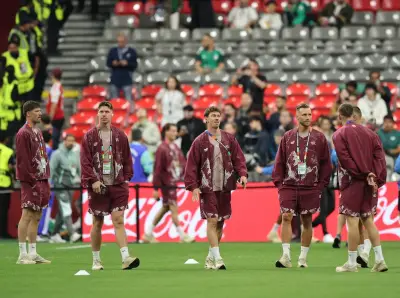
Switzerland head coach Murat Yakin has become an unlikely defender of FIFA's mandatory hydration breaks at the 2026 World Cup, calling them a valuable tactical tool that allows him to consult players and adjust strategy in real time. The breaks, which occur midway through each half and last three minutes, have drawn near-universal boos from fans but are praised by coaches for their strategic benefits.
Hydration breaks spark debate
Every match, about halfway through the first half and again in the second, the referee blows his whistle, points to the sidelines, and players march off for three minutes. Fans have booed, players grab water bottles, and coaches begin speaking. On television, the intervals are filled with commercials—except on Telemundo, the American Spanish-language channel, which has made a point of not showing ads during the breaks.
Previously, hydration breaks were only permitted if the referee deemed it necessary or if specific temperature and humidity thresholds were exceeded. Heat was a major issue during last summer's Club World Cup, leading FIFA to create a policy for this year's World Cup that all games feature hydration breaks, even in climate-controlled stadiums like those in Dallas and Houston, or in cooler venues such as Seattle and Vancouver.

TV networks cash in
Critics argue the real motivation is commercial. According to The Hollywood Reporter, Fox, which broadcasts the tournament in the U.S., is making between $2.5 million and $7 million US per match solely from commercials sold during hydration breaks. The network could earn as much as $500 million US over the entire tournament. Former ESPN president John Skipper said on the Pablo Torre Finds Out podcast that Fox could pull $1 million US per 30-second spot, with the three-minute window allowing for six spots per break.
Coaches embrace the pause
Despite fan frustration, many coaches appreciate the break. Yakin, who led Switzerland to the round of 16—they face Colombia in Vancouver on Tuesday—has used the intervals to fine-tune his team's performance. After Switzerland's outstanding 2-0 defeat of Algeria at B.C. Place last week, Yakin explained why the second-half hydration break is the ideal time to make substitutions.
“It gives us the opportunity to quickly talk to the players about what is needed,” Yakin said. He noted that while the coaching staff can see what is happening, he values player input. Often, he presents players with a pair of choices on potential changes and asks for their opinions. “It gives us two minutes where we can talk with the players. It gives me more assurance, I can ask the players what they think, we can provide some solutions and it gives me some feedback.”
Performance benefits
Yakin's approach has paid off. Switzerland has committed few errors, a result of the strong relationship between coach and player. He has designed a system the team believes in and makes adjustments on the fly based on player feedback. The hydration breaks, used effectively, can improve a team's performance, Yakin argued.
Fans and purists may hate the breaks, but it is hard to imagine coaches saying anything other than “let's keep them” when it comes time to review this tournament. As Yakin's success shows, the three-minute pause is more than a chance to drink water—it is a strategic asset.